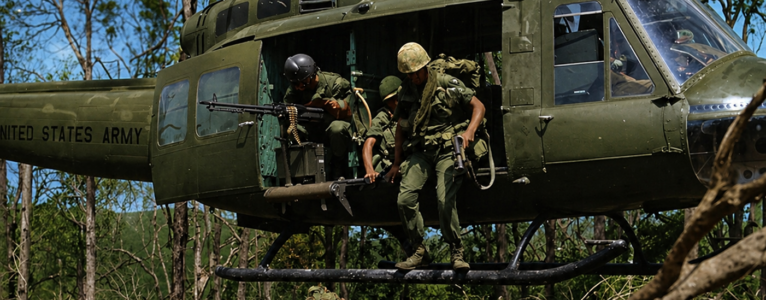
By the mid-1960s, the 1st Infantry Division had spent nearly two decades preparing for a war that never came.
Stationed in Europe during the Cold War, the division trained for large-scale armored conflict against a conventional enemy. Tanks, artillery, and coordinated maneuver warfare defined its doctrine.
But the war it was about to fight would be nothing like that.
No front lines.
No clear objectives.
No visible enemy.
In 1965, the Big Red One deployed to Southeast Asia, entering a conflict that would test it in entirely new ways.
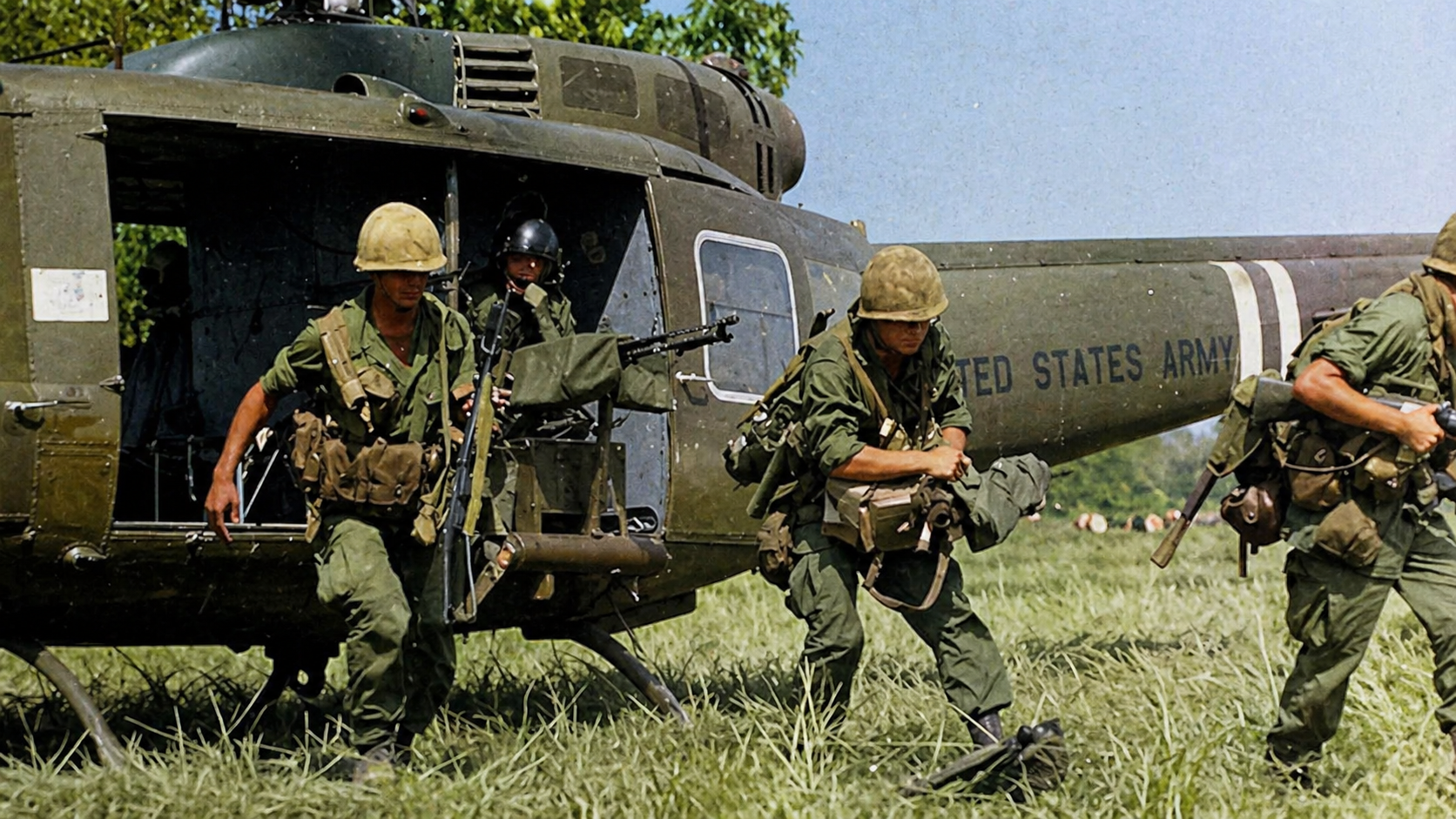
Into Vietnam, 1965
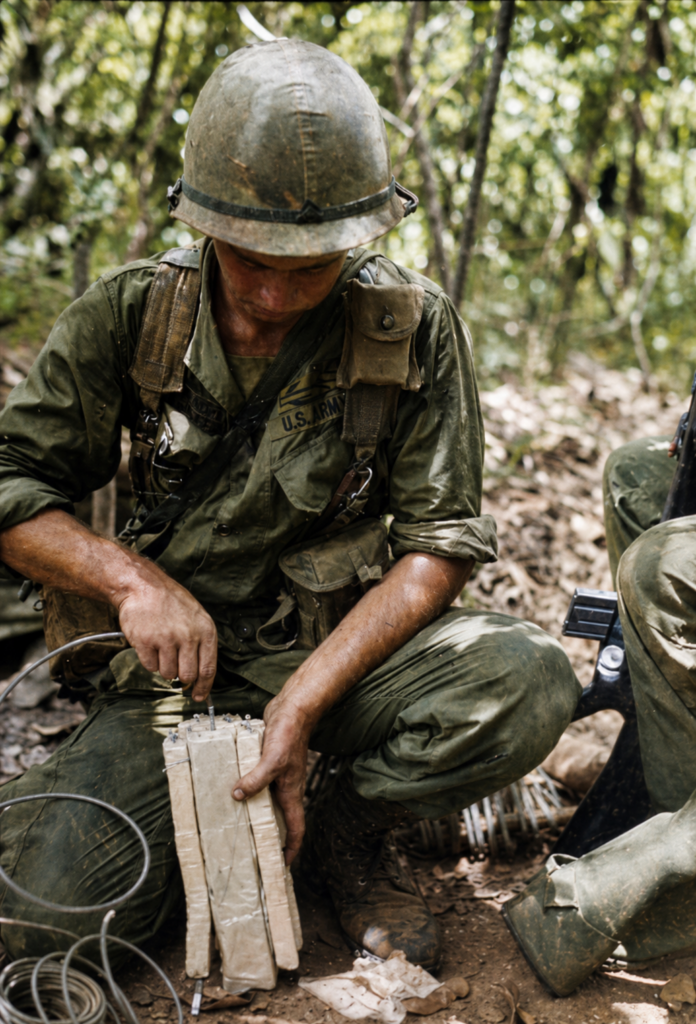
The division arrived in South Vietnam in the summer of 1965, establishing its base at Di An, just north of Saigon.
The environment was a shock.
Gone were the open fields of Europe. In their place:
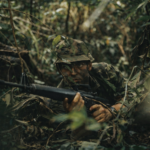
- dense jungle limiting visibility to a few meters
- extreme heat and humidity
- constant threat of ambush
- an enemy that rarely revealed itself
The division had to adapt quickly.
Instead of massed formations and clear battle lines, soldiers now operated in small units, moving through thick vegetation, searching for an enemy that could strike and disappear without warning.
Fighting an Invisible Enemy
The Viet Cong and North Vietnamese Army did not fight like the German forces the division had trained against.
They avoided large-scale engagements whenever possible, relying instead on:
- ambushes
- hit-and-run attacks
- booby traps and mines
- knowledge of the terrain
For the Big Red One, this meant constant tension.
Every trail could be trapped.
Every tree line could hide an ambush.
Every village could conceal enemy fighters.
Combat was often sudden and chaotic, a few seconds of intense violence followed by silence.
Search and Destroy
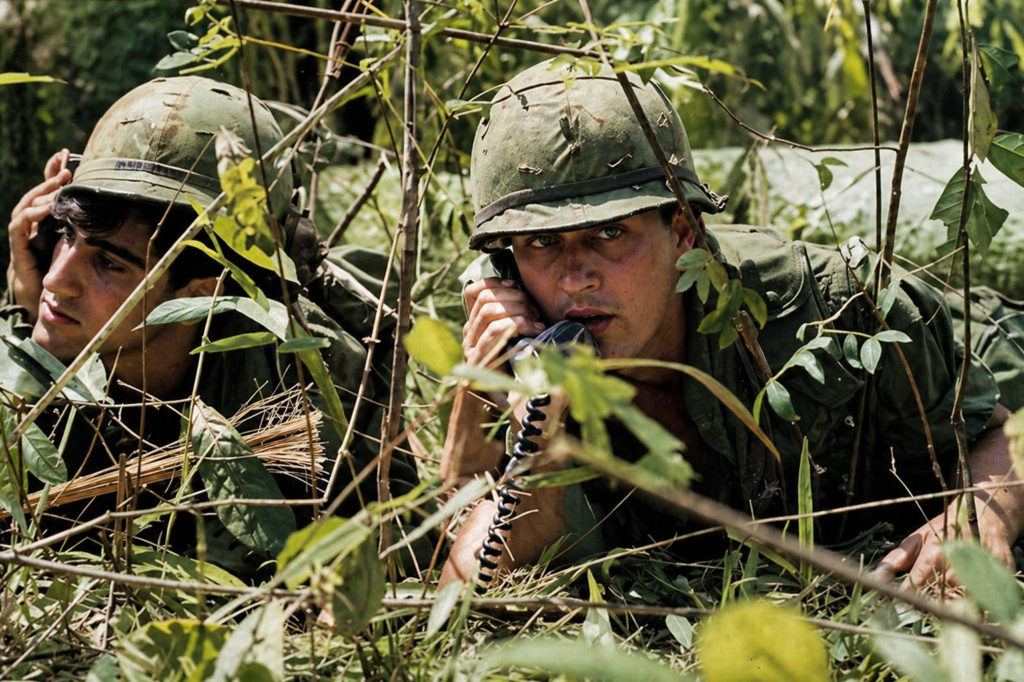
The primary mission of the 1st Infantry Division in Vietnam was to conduct search-and-destroy operations.
The concept was simple:
Find the enemy.
Engage them.
Eliminate their ability to operate.
In practice, it was far more complicated.
Operations often involved:
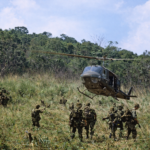
- helicopter insertions into suspected enemy areas
- sweeping large regions of jungle
- engaging enemy forces when found
- withdrawing and repeating the process elsewhere
Helicopters became essential, allowing the division to move quickly across terrain that would otherwise take days to cross.
But even with mobility, success was difficult to measure.
The enemy could avoid contact.
Territory gained one day could be abandoned the next.
Major Operations
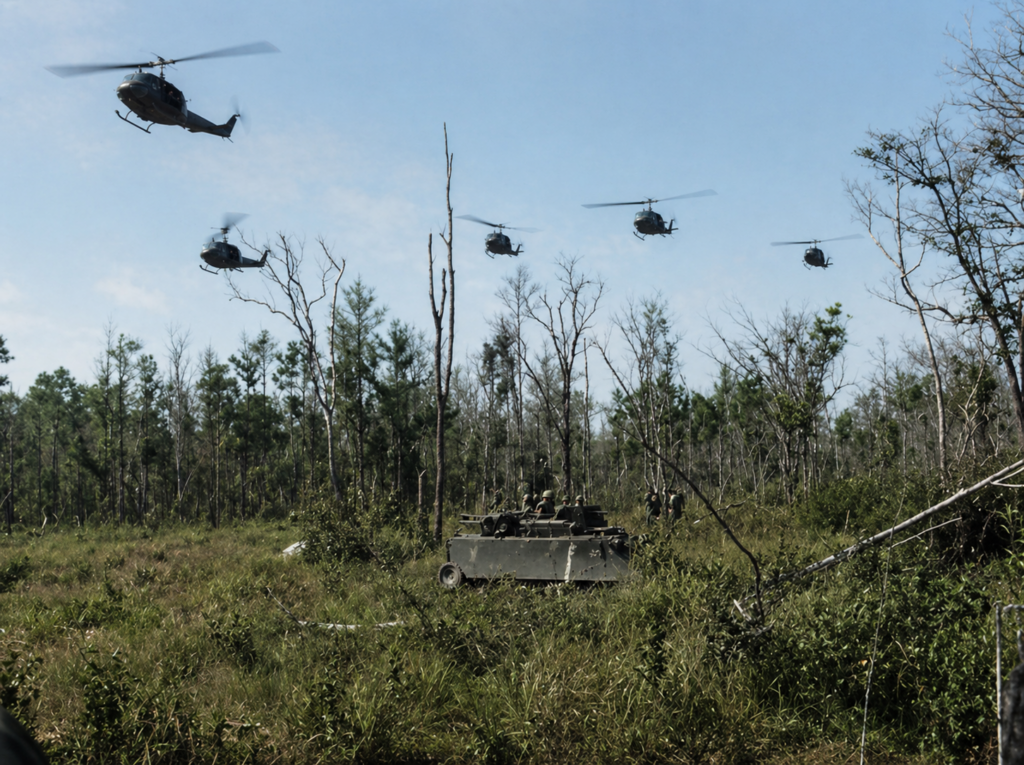
Throughout its time in Vietnam, the Big Red One took part in several major operations aimed at disrupting enemy strongholds.
Operation Cedar Falls (1967)
Focused on the Iron Triangle, a heavily fortified Viet Cong base area near Saigon.
- large-scale clearing operations
- destruction of tunnels and supply networks
- temporary disruption of enemy activity
Operation Junction City (1967)
One of the largest U.S. operations of the war.
- airborne and ground assaults
- attempts to locate enemy headquarters
- extensive fighting in dense jungle
These operations demonstrated the division’s ability to conduct large, coordinated actions, but also highlighted the difficulty of achieving lasting results.
The Soldier’s War
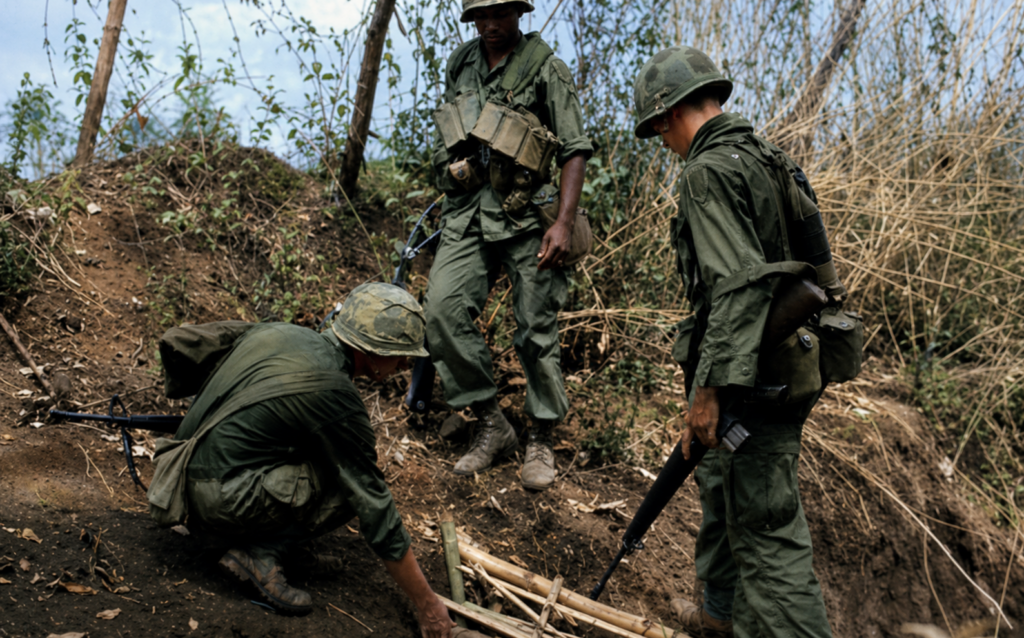
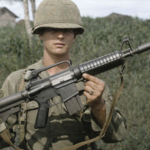
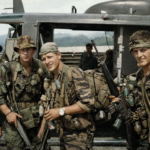
For the men of the Big Red One, Vietnam was a war of endurance.
Long patrols through jungle.
Short, violent firefights.
Constant exposure to danger without clear progress.
The enemy was rarely seen, but always present.
Fatigue, stress, and uncertainty became part of daily life.
Adaptation and Experience
Despite the challenges, the 1st Infantry Division adapted, just as it had in previous wars.
- improved small-unit tactics
- better coordination with air support
- increased use of intelligence and reconnaissance
- refined approaches to counterinsurgency
The division became one of the most experienced units operating in Vietnam.
The End of the Deployment
By 1970, the Big Red One began withdrawing from Vietnam as U.S. strategy shifted.
After years of combat, the division returned home, once again having fought in a war very different from the one it had prepared for.
A Different Kind of War
Vietnam was unlike anything the Big Red One had experienced before.
No decisive battles.
No clear front lines.
No final victory in the traditional sense.
But the division carried forward something familiar:
Adaptation.
From the trenches of World War I
To the beaches of World War II
To the jungles of Vietnam
The Big Red One continued to evolve with each new conflict.
Looking Ahead
In the next part of this series, we follow the 1st Infantry Division into the modern era, from the Gulf War to Iraq and Afghanistan, where technology, strategy, and warfare itself would change once again.