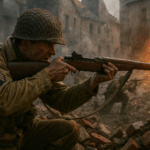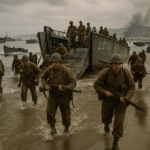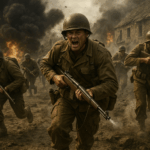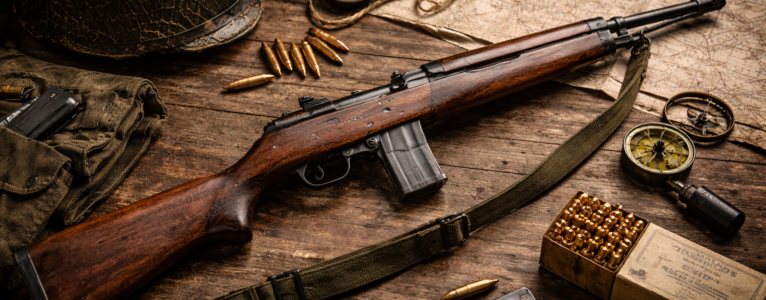
In the chaos of World War II, American soldiers carried some of the most iconic weapons ever fielded: the M1 Garand, the Thompson submachine gun, and the Browning Automatic Rifle. Yet one of the most widely use, and often misunderstood, was the M1 Carbine.
Small, lightweight, and easy to handle, the M1 Carbine wasn’t designed for front-line infantry assaults. Instead, it filled a crucial gap in the U.S. Army’s arsenal: a weapon for the thousands of soldiers who fought the war’s quiet battles behind the lines.
And in the end, more than six million carbines would be produced, more than the legendary Garand itself.
A Weapon Born from a Problem
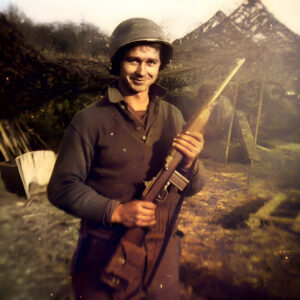
Before WWII, many American soldiers, radio operators, mortar crews, drivers, and officers, were issued only a pistol.
That was fine on paper.
But on a battlefield, a pistol has serious limitations. Its range and accuracy are poor compared to a rifle, and a soldier armed only with a sidearm was at a severe disadvantage if suddenly engaged by enemy troops.
The U.S. Army realized it needed something in between:
- lighter than a rifle
- more effective than a pistol
- simple enough for support troops to carry while performing other tasks
The solution was what today might be called a Personal Defense Weapon, decades before that term existed.
The Army wanted a weapon weighing under five pounds with an effective range of about 300 yards.
That requirement would lead to one of the fastest weapon development programs of the war.
The Cartridge: A New Round for a New Role
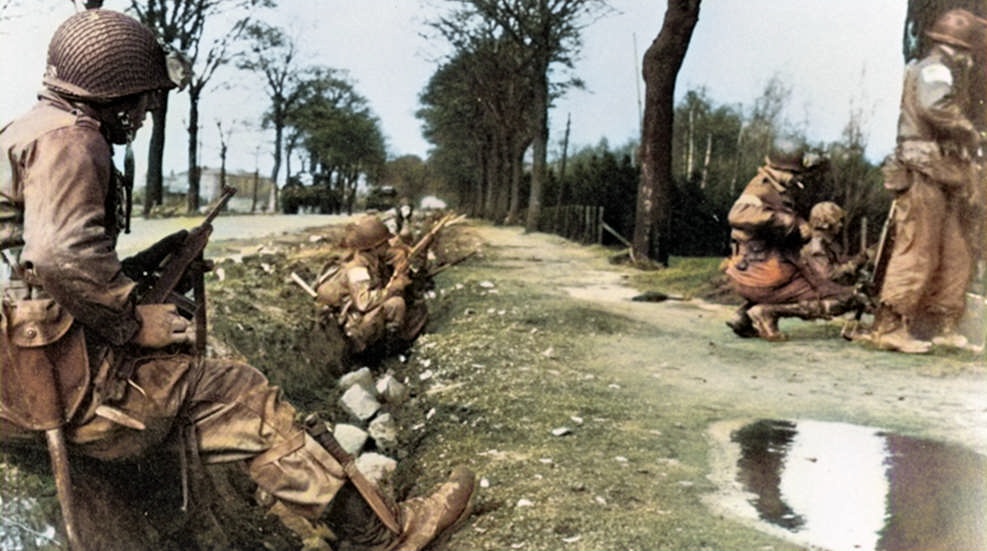
To make the concept work, a new cartridge had to be developed.
Winchester created the .30 Carbine round based on the earlier .32 Winchester Self-Loading cartridge. The final round fired a 110-grain bullet at roughly 1,900 feet per second, producing about 880 foot-pounds of energy.
Compared to the powerful .30-06 cartridge fired by the M1 Garand, the new round was far less powerful. But it offered several advantages:
- low recoil
- lighter ammunition
- faster follow-up shots
- compact weapon design
The result was a firearm that could be carried easily by soldiers who already had plenty of equipment.
The Race to Build the Carbine
The Army opened a competition for a “light rifle” in 1941. Several companies submitted designs, including Savage, Colt, Springfield Armory, and Auto-Ordnance.
None of the early prototypes impressed evaluators.
Then Winchester entered the competition late.
Within just 13 days, engineers created a prototype using a short-stroke gas piston system.
During final trials in September 1941, the Winchester design dramatically outperformed the competition and was adopted as the Carbine, Caliber .30, M1.
The timing could not have been more critical.
Two months later, the United States entered the war.
America’s Industrial Machine
Demand for the new weapon exploded overnight.
The government turned to American industry on a massive scale. Companies that had never produced firearms suddenly found themselves building carbines.
Manufacturers included:
- Winchester
- Inland (General Motors)
- IBM
- Rock-Ola (yes, the jukebox company)
- National Postal Meter
- Quality Hardware
Production became a remarkable industrial achievement.
By the end of the war, over six million M1 and M2 carbines had been produced, making it one of the most widely manufactured U.S. weapons of WWII.
Why Soldiers Loved It
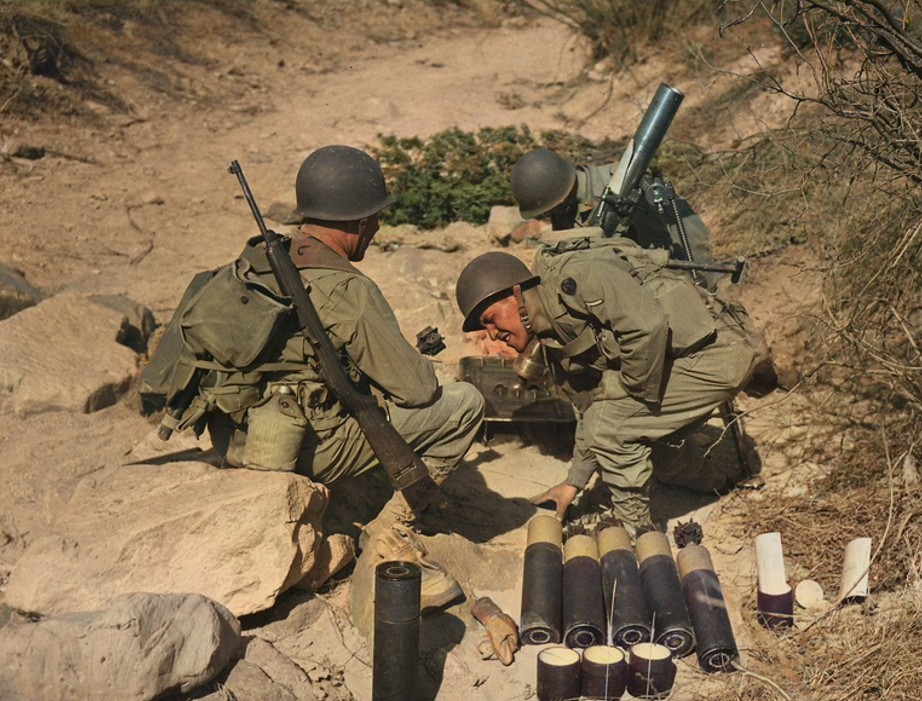
The M1 Carbine weighed about five pounds, nearly half the weight of the M1 Garand.
For troops who had to carry radios, mortars, or machine-gun ammunition, that difference mattered.
Many soldiers appreciated:
- its light weight
- low recoil
- compact size
- quick-changing magazines
Airborne troops especially valued the carbine. A folding-stock version called the M1A1 was developed for paratroopers, making it easier to jump with the weapon.
In jungles and dense terrain, the carbine’s short length made it easier to maneuver than a full-size rifle.
The Criticism
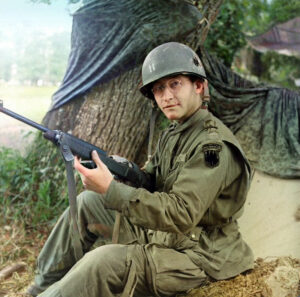
The M1 Carbine wasn’t perfect.
Its biggest criticism was stopping power.
Compared to the Garand’s .30-06 cartridge, the .30 Carbine round lacked the same punch. Soldiers sometimes complained that enemies did not always drop immediately after being hit.
But that comparison misses the point.
The real alternative for most carbine users wasn’t the Garand.
It was a pistol.
And compared to a pistol, the carbine offered dramatically better:
- range
- accuracy
- magazine capacity
- ease of use
In that role, it was extremely effective.
Evolution of the Carbine
As the war progressed, improvements were introduced:
Late-war upgrades included:
- adjustable rear sights
- improved safety
- bayonet lug
- grenade launcher attachment
Engineers also developed the M2 Carbine, a select-fire version capable of automatic fire with a 30-round magazine.
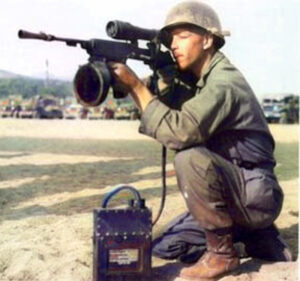
Another experimental variant, the M3 Carbine, mounted an early infrared night-vision scope, an ancestor of modern night-fighting equipment.
A Weapon That Refused to Die
Unlike many wartime weapons that disappeared after 1945, the M1 Carbine continued serving for decades.
It saw combat in:
- World War II
- Korea
- Vietnam
Police departments used it for years, and many allied nations adopted it as well. Some carbines are still found in military or police armories today.
Even in the civilian world, it remains one of the most collected American military firearms.
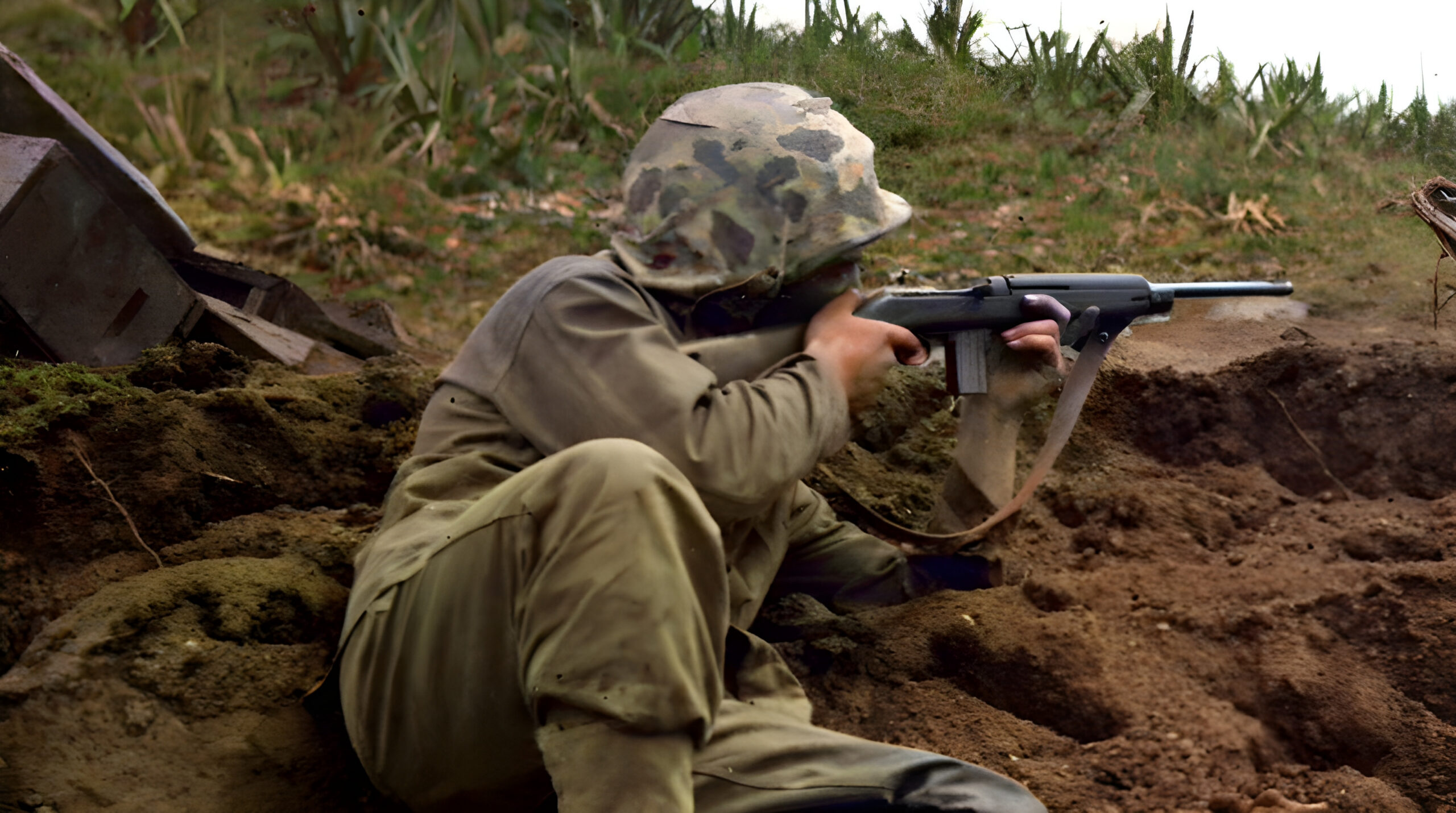
After carrying a Garand, the carbine felt like a toy, but it was a toy that could save your life.
The Legacy of the M1 Carbine
The M1 Carbine was never meant to replace the battle rifle.
Instead, it solved a very specific problem: giving support troops a weapon they could actually fight with.
In doing so, it became one of the most successful military firearms of the 20th century.
Light, reliable, and easy to carry, the M1 Carbine quietly armed millions of soldiers in the world’s largest war, and remained in service long after that war ended.
Sometimes the most influential weapons aren’t the biggest.
They’re the ones that soldiers actually carry.