
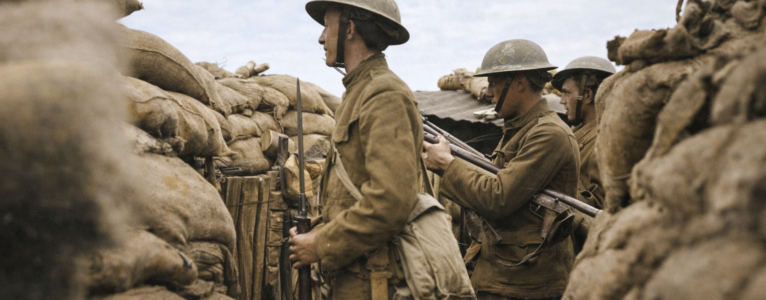
In this four-part series, we’ll follow the story of the Big Red One across more than 100 years of history, exploring how the division fought, adapted, and evolved through changing forms of warfare.
This series is divided into four posts:
- World War I – The birth of the Big Red One and its first battles in France
- World War II – From North Africa to the beaches of Normandy
- Late 20th Century – The Cold War, and the Gulf War
- Modern Era – The division in Iraq, Afghanistan, and beyond.
This first post begins where the story started: the trenches of France in 1917, where the Big Red One earned its first combat reputation.
The Birth of America’s First Fighting Division
When the United States entered World War I in April 1917, the American Army was unprepared for the scale and brutality of the conflict raging in Europe. The Western Front had already consumed millions of lives in trench warfare that stretched from the North Sea to Switzerland. European armies had spent nearly three years grinding against each other in mud, artillery fire, and barbed wire.
Into this environment stepped a new American formation that would eventually become one of the most famous divisions in U.S. military history: the 1st Infantry Division.
Its soldiers were young, largely untested, and thrown into a war that had already proven capable of destroying entire armies. Yet by the end of the conflict, the division would help prove that American troops could fight, and win, on Europe’s deadliest battlefield.
Creating America’s First Combat Division
The 1st Infantry Division was officially organized in June 1917, only weeks after the United States committed itself to the war.
Its core units included some of the oldest regiments in the U.S. Army:
- 16th Infantry Regiment
- 18th Infantry Regiment
- 26th Infantry Regiment
- 28th Infantry Regiment
These regiments formed the backbone of the division’s two infantry brigades, supported by artillery, engineers, and support units.
Most of the soldiers were inexperienced, but the leadership understood something critical: American forces would need time to learn modern warfare before facing German troops.
The division deployed to France later in 1917 and began an intense period of training alongside French and British forces. American soldiers had to quickly learn the brutal mechanics of trench warfare:
- navigating trench systems
- coordinating artillery barrages
- fighting through barbed wire defenses
- surviving constant shellfire
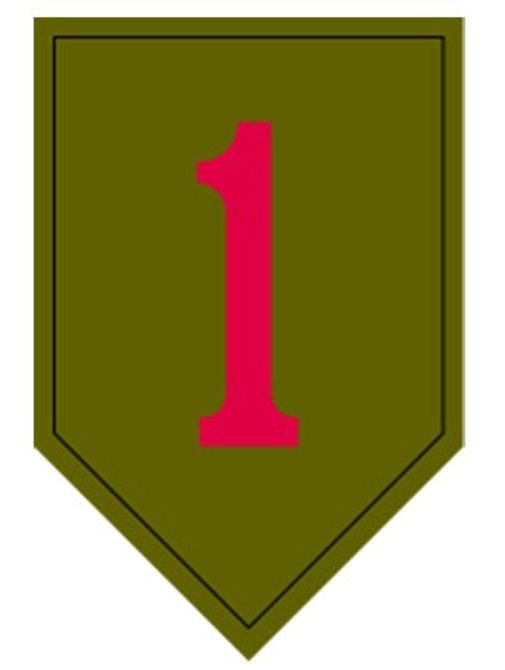
It was during this period that the division adopted the distinctive red “1” shoulder patch.
According to one popular story, the insignia originated when a staff officer cut the number “1” from red cloth and sewed it onto his uniform. The symbol stuck, eventually becoming one of the most recognizable military insignia in the world.
The nickname “The Big Red One” would follow soon after.
But training could only go so far. Eventually, the division would have to prove itself in combat.
That test came in the spring of 1918.
Baptism of Fire at Cantigny
The division’s first major combat operation took place at the small French village of Cantigny during the Battle of Cantigny on May 28, 1918.
Although the battle was relatively small compared to later offensives, its importance was enormous.
Until that point, American troops had played only limited roles along the front lines. Allied commanders wanted to know if the Americans were capable of launching and holding an offensive against hardened German defenses.
Cantigny provided that opportunity.
The attack was led by the division’s 28th Infantry Regiment, supported by French artillery, tanks, and aircraft. The objective was straightforward: capture the village and hold it against the inevitable German counterattacks.
Before dawn, American artillery began a coordinated barrage against German positions. Minutes later, U.S. infantry advanced behind the creeping artillery fire.
For many of the soldiers, it was their first experience in combat.
They moved through shattered terrain filled with shell craters, broken trees, and tangled barbed wire. German machine guns quickly opened fire, turning the battlefield into chaos.
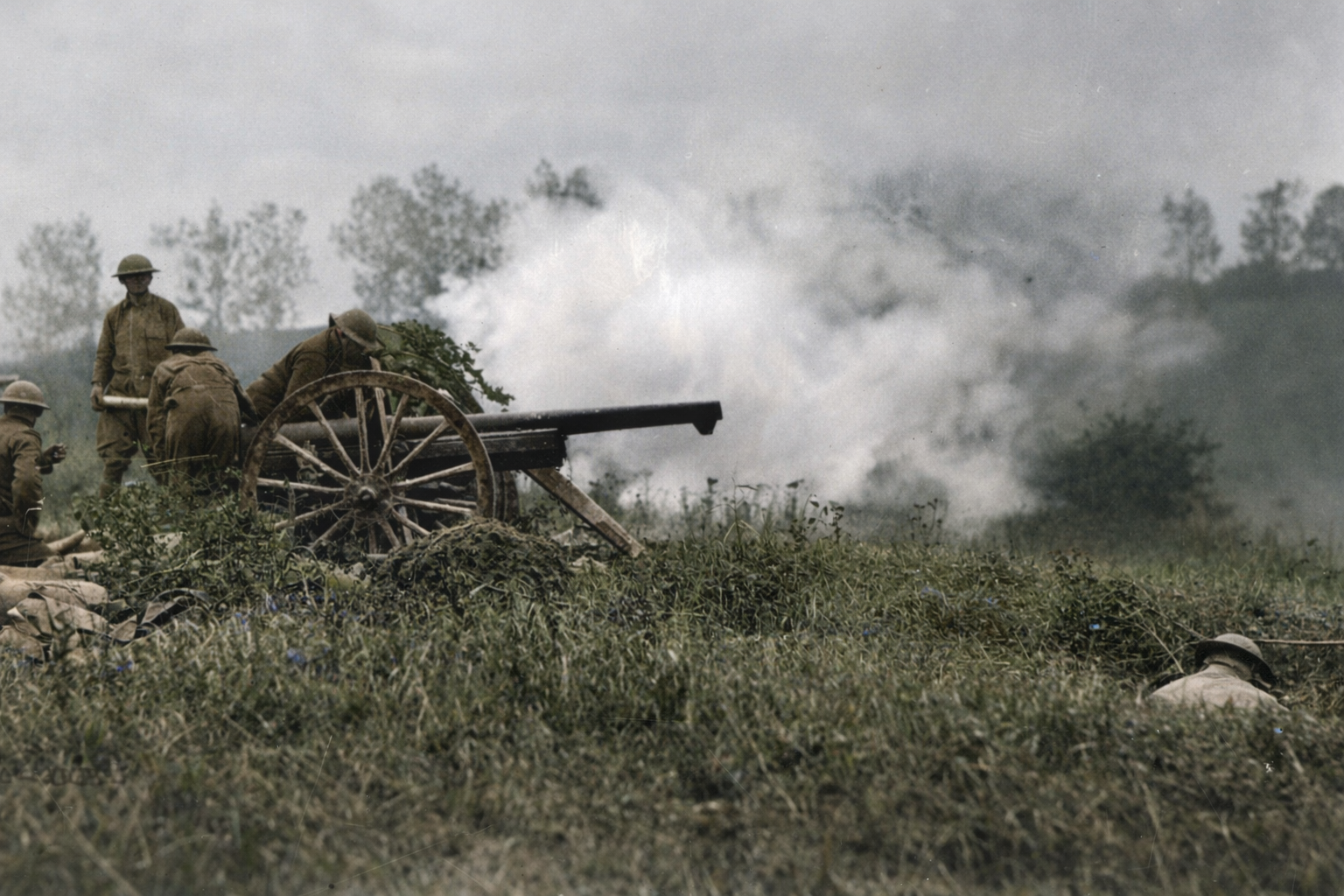
Despite the resistance, the American troops pushed forward and seized the village within hours.
Holding it proved even harder.
German forces launched multiple counterattacks over the following days, supported by artillery and gas shells. The newly arrived American soldiers had to endure relentless bombardment while defending their newly captured ground.
Yet the division held.
By the time the fighting ended, the Americans had suffered over a thousand casualties. But the strategic result mattered more than the numbers.
Cantigny demonstrated something the Allies desperately needed to know:
American troops could successfully attack German positions and hold them.
The reputation of the 1st Infantry Division had begun to take shape.
The Meuse-Argonne Slaughter
Later that year, the division would face a far larger and far more brutal test during the Meuse-Argonne Offensive.
Launched in September 1918, the offensive was the largest military operation in American history up to that point. Over one million American soldiers took part in a massive effort to break through the German defensive lines in northeastern France.
The terrain was a nightmare.
The Argonne Forest was dense, broken ground filled with ravines, hills, and thick woods, perfect terrain for defenders. German forces had spent years building defensive networks of trenches, machine-gun nests, and fortified positions.
Advancing through this landscape meant facing:
- hidden machine guns
- devastating artillery fire
- poisoned gas attacks
- constant sniper fire
The soldiers of the 1st Infantry Division fought through some of the most intense combat of the entire campaign.
Progress was slow and costly.
Infantry units often had to attack heavily fortified German positions head-on. Machine guns could sweep entire fields, forcing soldiers to crawl through mud and shell craters just to reach the enemy trenches.
Casualties mounted quickly.
Yet the division continued pushing forward alongside other American units, gradually wearing down the German defenses.
By the time the offensive ended in November 1918, the German army was exhausted and retreating across the front. The offensive played a major role in forcing Germany to seek an armistice, bringing the war to an end.
For the soldiers who survived, the cost had been staggering.
But the division had proven itself in the largest battle the United States had ever fought.
A Reputation Is Born
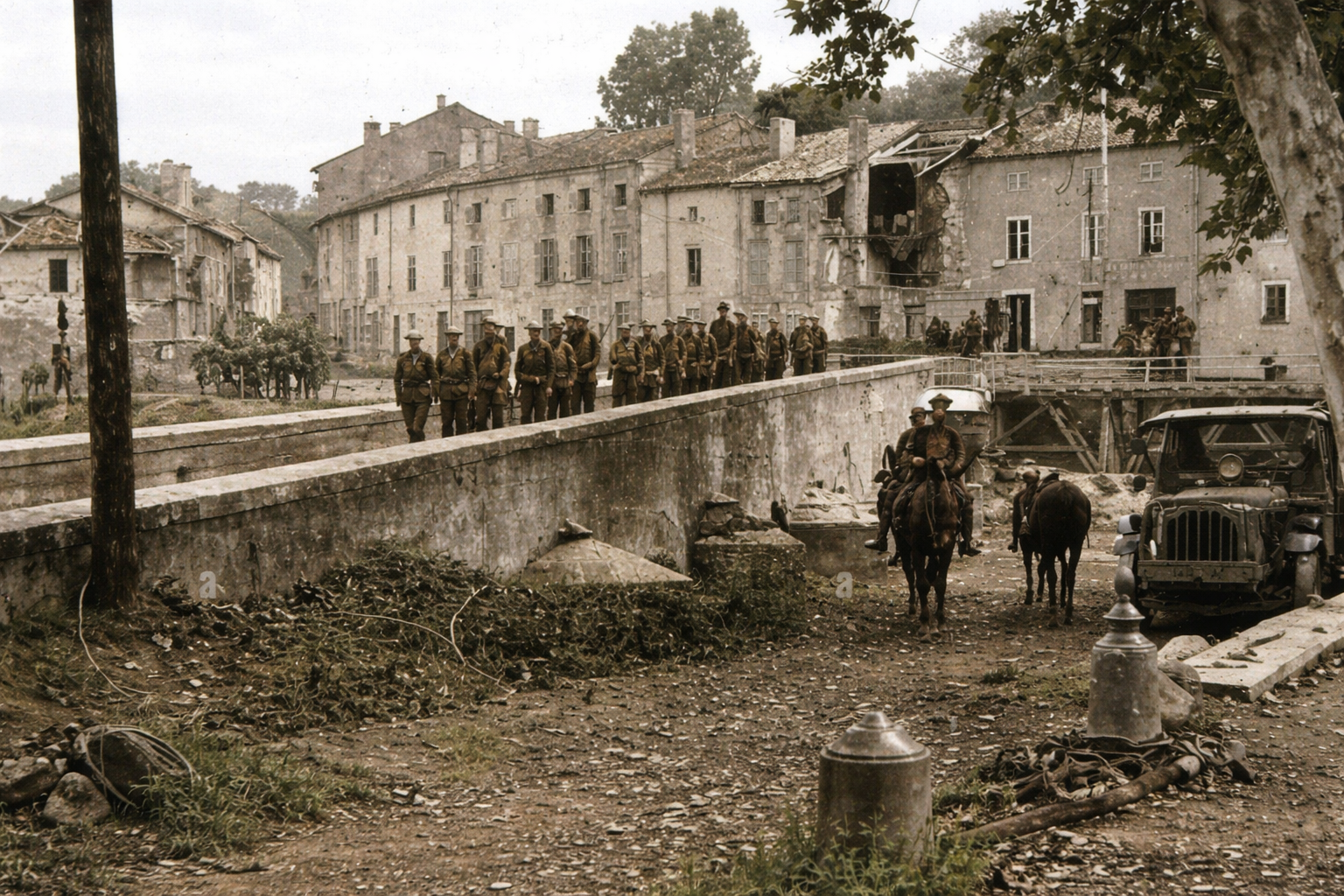
“You learned quickly that the only safe place was the German trench.”
— A veteran of the division recalling assaults through the Argonne.
By the end of World War I, the 1st Infantry Division had established a reputation as one of the most capable units in the American Army.
Its soldiers had fought through some of the war’s toughest battles, adapting quickly to the brutal realities of modern warfare.
More importantly, they had demonstrated that American forces could operate effectively on the Western Front alongside seasoned Allied armies.
The division returned home with battle honors, experience, and a growing legend attached to its red “1” insignia.
Few could have known it at the time, but the story of the Big Red One was far from over.
Within a generation, its soldiers would once again cross the Atlantic, this time to fight across North Africa, Sicily, and the beaches of Normandy in another global conflict.
The division that first proved itself in the trenches of France would soon become one of the most famous combat units of the Second World War.
Continue the Story of the Big Red One
The battles described in this article inspired my novel Big Red One – Book 4: World War I, a story set during the brutal fighting of World War I.
Follow American soldiers of the 1st Infantry Division as they enter the war in France, face their first combat during the Battle of Cantigny, and fight through the deadly forests of the Meuse-Argonne Offensive.
Through mud-filled trenches, relentless artillery fire, and desperate infantry assaults, the men of the Big Red One must prove themselves on a battlefield that has already destroyed millions.
If you enjoy historical military fiction grounded in real battles and real soldiers, Big Red One – Book 4: World War I brings these moments to life.
Available on Amazon. Get is here.
Related posts:
 Old Hickory in Battle: The Full History of the 30th Infantry Division in WWI and WWII
 The Meuse-Argonne Offensive: America’s Bloody Road to Victory in WWI
 SAS vs. Rangers: How Britain’s Special Air Service and America’s Rangers Took the Fight to the Axis
 📣 Book Announcement: Big Red One, Book 5 – North Africa is Here!