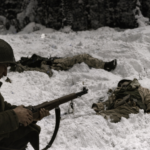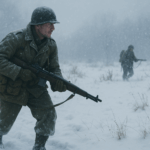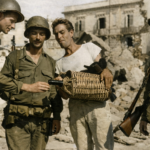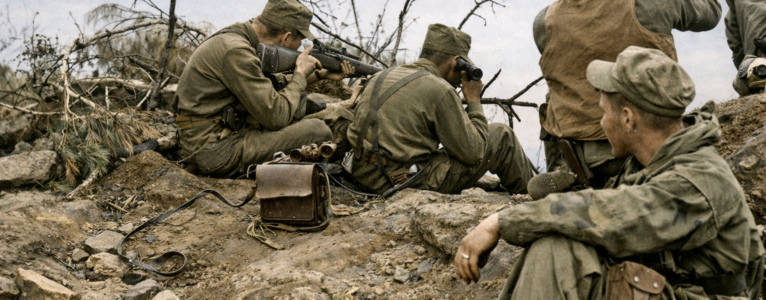
When World War II ended in 1945, the U.S. Army Rangers had already built a reputation for daring missions and aggressive combat leadership. From the night raids of North Africa to the cliffs of Normandy, Ranger battalions had proven the value of elite light infantry.
But after the war, the Ranger units were disbanded.
For several years, the Rangers existed mostly as a legacy rather than an active force.
That changed abruptly in 1950.
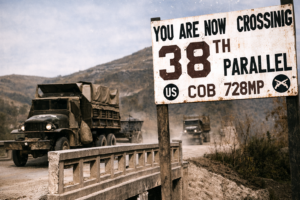
When North Korean forces crossed the 38th Parallel and invaded South Korea, the United States once again found itself fighting a sudden and brutal war. The conflict quickly revealed a familiar problem: American forces needed small, highly trained units capable of operating aggressively in difficult terrain.
The answer was to revive the Rangers.
A War of Mountains and Maneuver
The Korean War began in June 1950 when North Korean forces launched a massive surprise attack against South Korea.
Within weeks, United Nations forces were pushed back to a small defensive perimeter around the port city of Pusan. American units fought desperately to halt the advance while reinforcements poured into the theater.
The terrain of Korea posed serious challenges.
Much of the fighting took place in rugged mountains, narrow valleys, and small villages connected by poor roads. Large formations were often difficult to maneuver, and enemy forces frequently infiltrated through gaps in defensive lines.
Military planners recognized that elite, fast-moving units could play an important role in this environment.
The Army decided to bring back the Rangers.
The Creation of the Ranger Companies
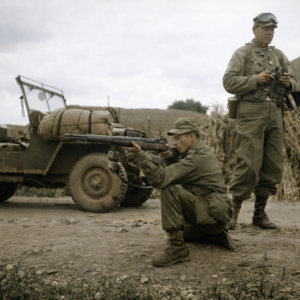
Instead of recreating large battalions like those used in World War II, the Army organized smaller Ranger companies designed for flexibility.
The first unit activated was the 8th Army Ranger Company, formed in August 1950.
Volunteers from across the Army were recruited for the unit. Many were experienced combat soldiers already serving in Korea.
Training focused on the same principles that had guided the original Rangers during World War II:
- aggressive leadership
- rapid movement
- surprise attacks
- small-unit combat
These Ranger companies were expected to operate in front of conventional forces, conducting reconnaissance, raids, and special missions.
Soon, additional Ranger companies were formed and deployed to the Korean peninsula.
The 1st Ranger Infantry Company (Airborne)
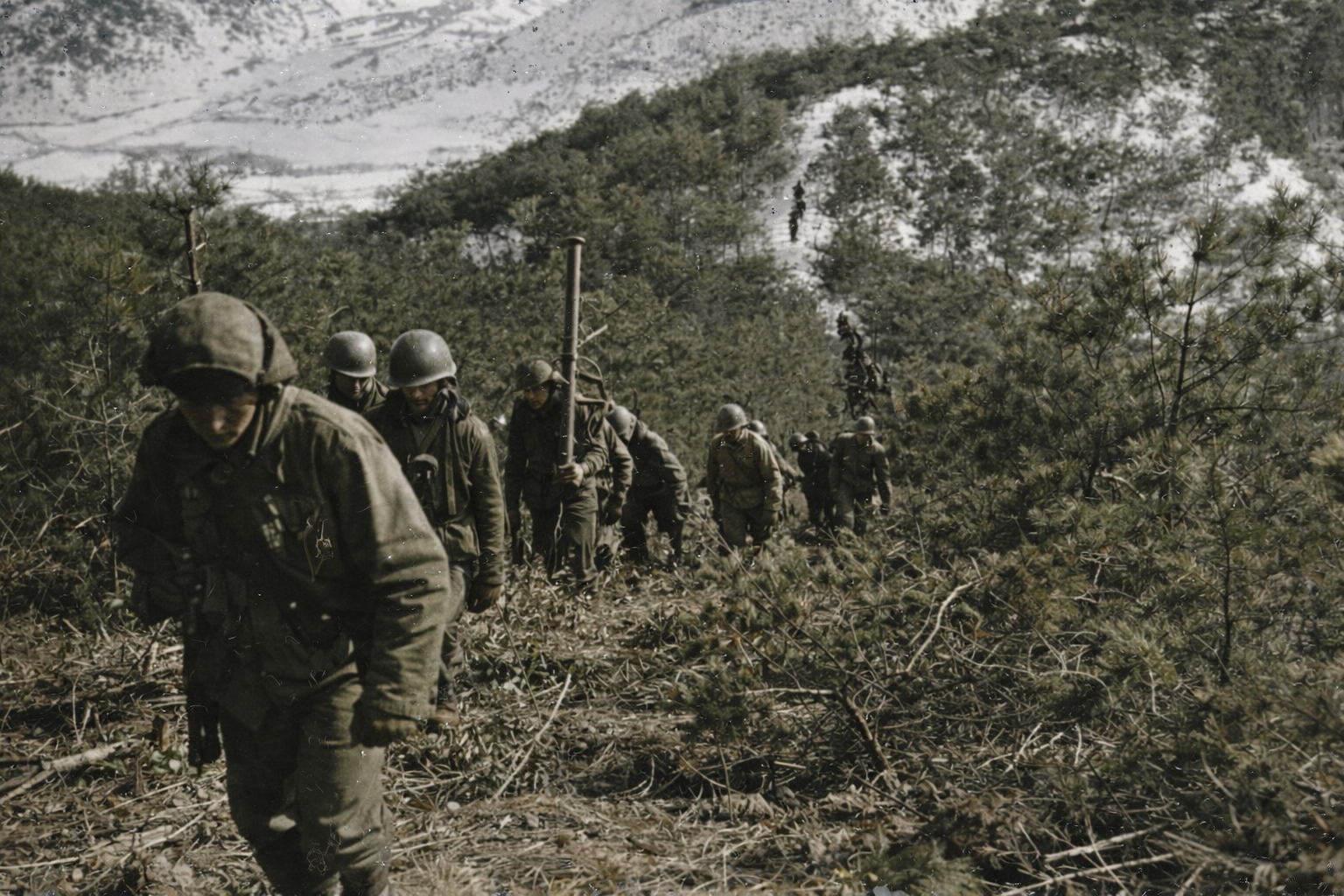
One of the most notable of these units was the 1st Ranger Infantry Company (Airborne).
Activated in September 1950, the company was composed largely of airborne-qualified soldiers and volunteers drawn from units already fighting in Korea.
Their mission was similar to the World War II Rangers: aggressive combat patrols, raids, and the seizure of key terrain ahead of larger formations.
The 1st Ranger Company quickly gained a reputation for its effectiveness in combat.
Operating along the rugged front lines of Korea, the Rangers carried out reconnaissance missions deep into enemy territory, ambushed North Korean forces, and spearheaded attacks against fortified hill positions.
Their ability to move quickly through difficult terrain made them valuable during fast-moving phases of the war, particularly during United Nations offensives following the successful amphibious landing at Battle of Inchon.
The company fought in numerous engagements during the fall and winter of 1950 before eventually being deactivated in 1951 as the Army reorganized its forces in Korea.
Other Ranger Companies in Korea
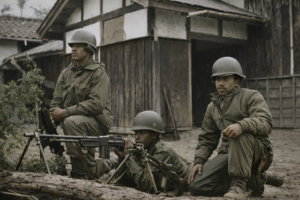
In total, seventeen Ranger companies were activated during the Korean War.
Among them were:
- 2nd Ranger Infantry Company (Airborne)
- 3rd Ranger Infantry Company (Airborne)
- 4th Ranger Infantry Company (Airborne)
- 5th Ranger Infantry Company (Airborne)
- 6th Ranger Infantry Company (Airborne)
- 7th Ranger Infantry Company (Airborne)
These companies were typically attached to larger U.S. divisions operating along the front lines.
Their missions included:
- conducting deep reconnaissance patrols
- ambushing enemy supply routes
- attacking isolated enemy positions
- securing key terrain ahead of major offensives
Because of their small size and specialized training, Ranger companies often operated independently or in support of larger infantry formations.
Why They Were Called “Airborne”
Most of the Ranger companies created in 1950–1951 were designated Ranger Infantry Company (Airborne) because:
- The Army wanted units capable of rapid insertion behind enemy lines.
- Many volunteers already came from airborne units.
- The companies trained in parachute operations and airborne tactics.
These units were trained to jump, but the war in Korea rarely required it.
Fighting in Harsh Conditions
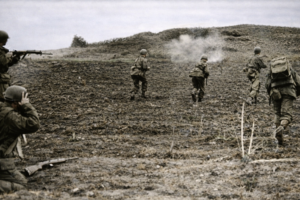
Combat in Korea was often brutal.
Summers were hot and humid, while winters brought freezing temperatures and heavy snow. Soldiers fought on steep ridgelines and rocky hillsides where artillery and machine guns dominated the battlefield.
Rangers frequently operated in isolated conditions, sometimes cut off from support while conducting deep patrols.
Their missions demanded both endurance and initiative.
In many cases, Ranger patrols had to rely on stealth rather than firepower. Moving quietly through the mountains at night, they gathered intelligence on enemy positions and relayed critical information back to headquarters.
These missions helped shape the evolving tactics of the war
The Legacy of the Korean Rangers
Although the Ranger companies in Korea were relatively small, their impact was significant.
They demonstrated once again that highly trained light infantry could operate effectively in difficult terrain and fluid battlefields.
The experience gained during the Korean War influenced the development of later special operations units and Ranger doctrine.
After the war, most Ranger companies were once again disbanded.
But the concept had survived.
The Ranger tradition, volunteer soldiers trained for speed, aggression, and elite combat would continue to evolve in the decades that followed.
When the United States entered another difficult conflict in Southeast Asia, that tradition would return to the battlefield once more.
The Bigger Legacy
Although the airborne capability was rarely used in Korea, the Ranger companies proved something important.
Small, highly trained units could operate independently in difficult terrain and gather intelligence that larger formations could not.
Those lessons would influence the development of reconnaissance and special operations units in the next conflict the United States fought:
Vietnam.
And in Vietnam, Ranger-style units would conduct some of the most dangerous patrols of the entire war.
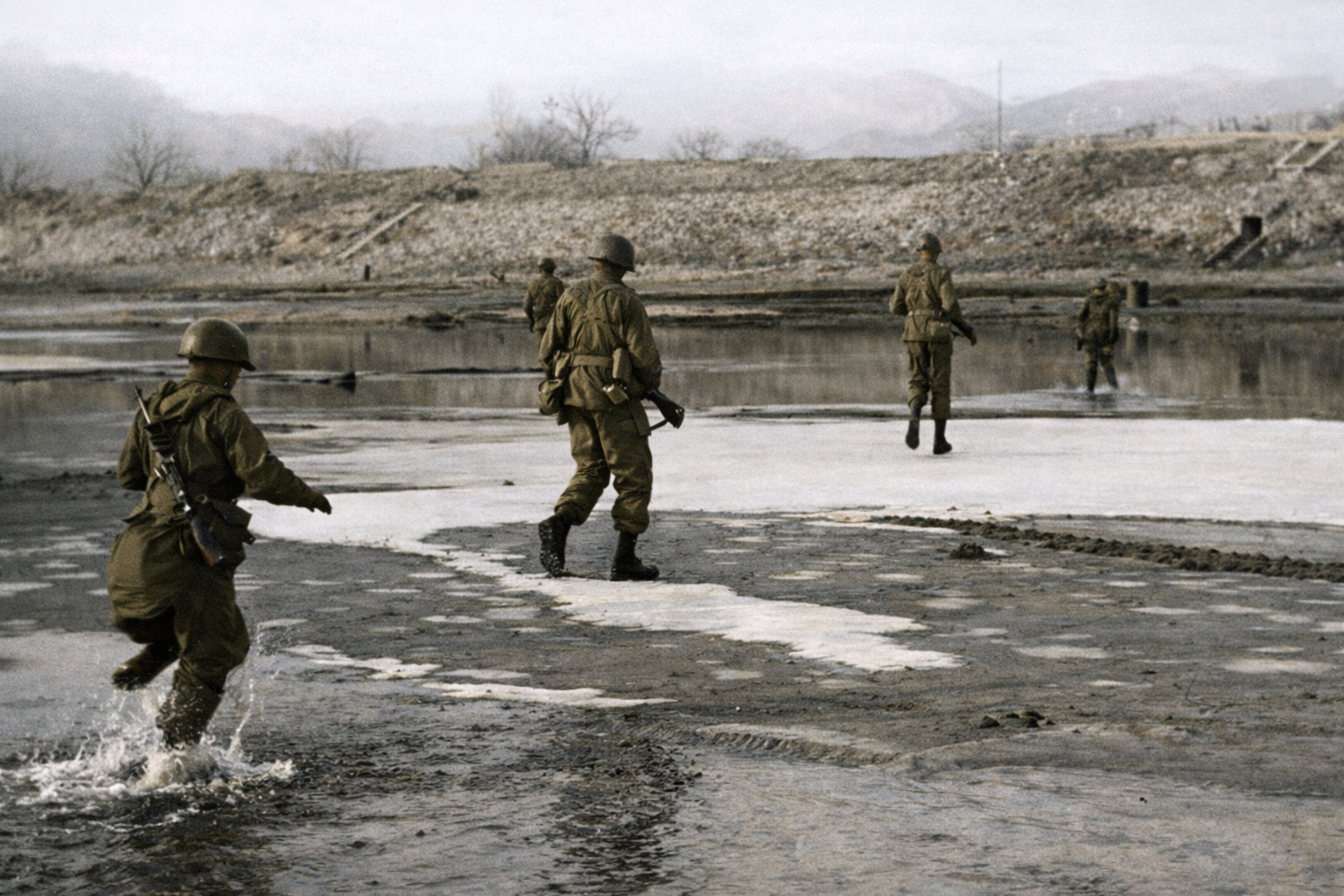
Get up, close and personal with the 1st Ranger Company in my book ‘Rangers, Kora’