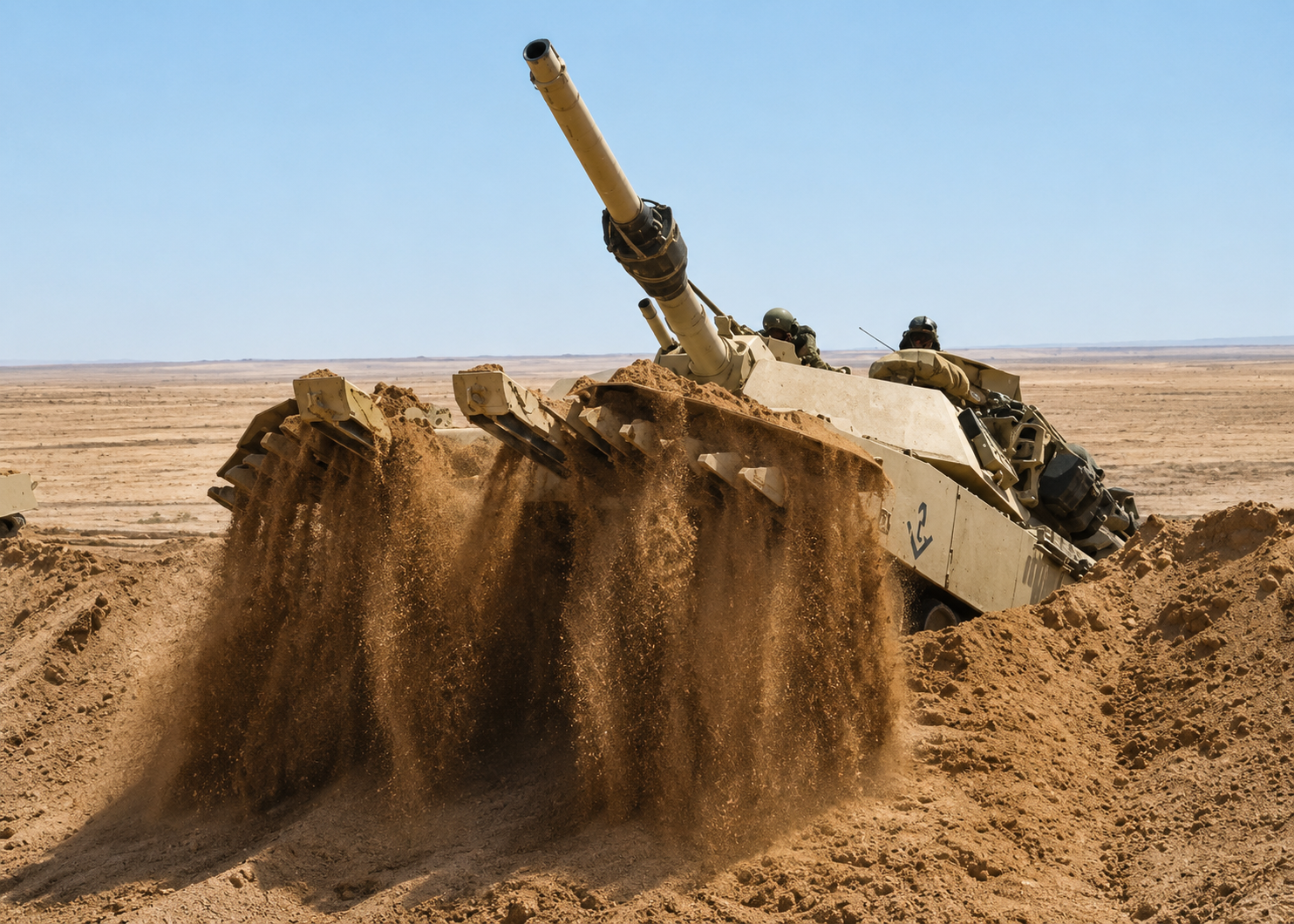
By 1990, the 1st Infantry Division had spent nearly two decades stationed at Fort Riley, Kansas, training once again for the war it had prepared for before Vietnam: a massed Soviet armored thrust across the plains of Central Europe.
That war never came.
Instead, in the summer of 1990, Iraq invaded Kuwait. And the Big Red One found itself preparing for a different kind of fight entirely — not in the forests of Germany, but in the open desert of the Arabian Peninsula.
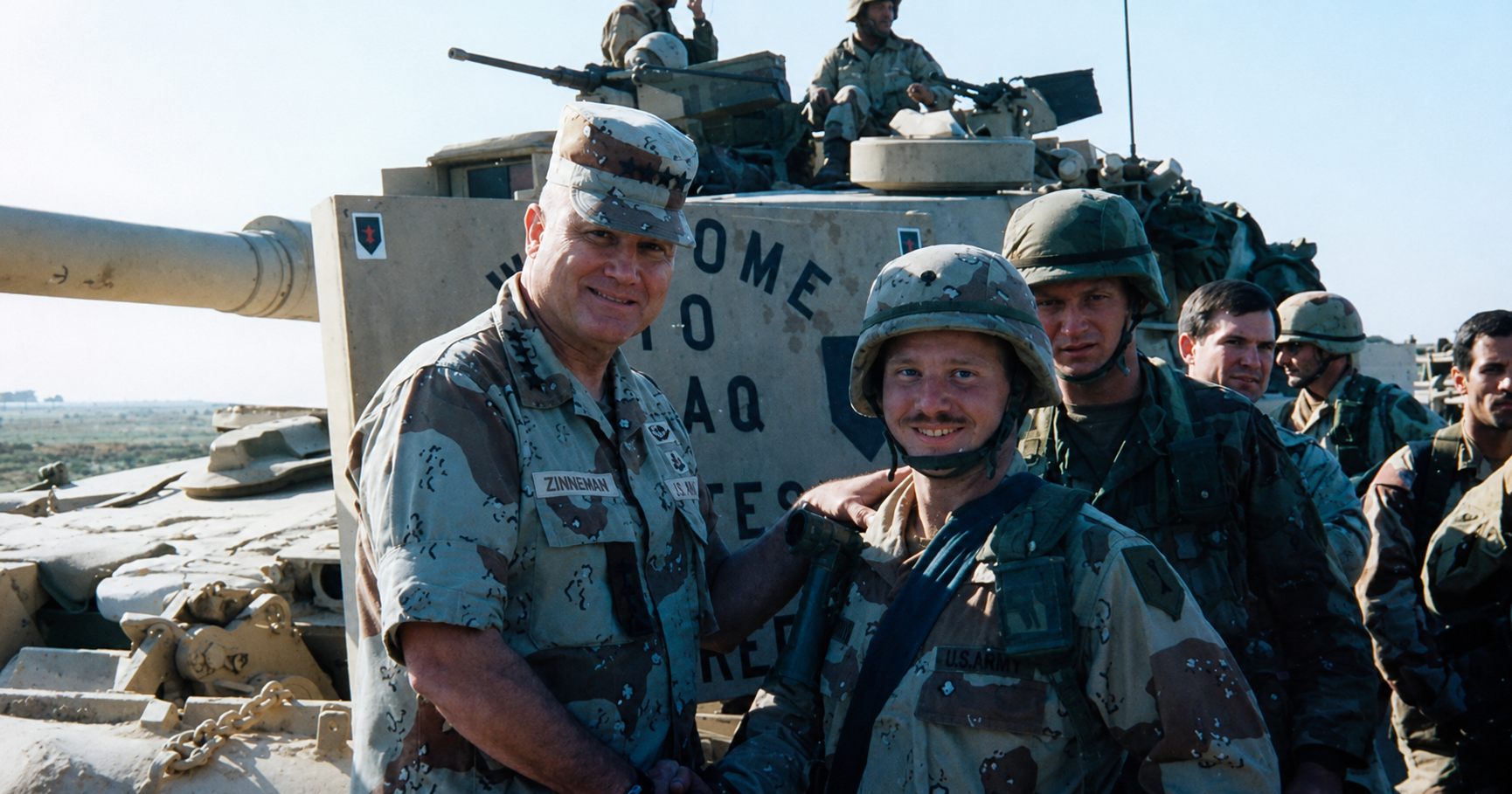
Alert and Deployment, 1990
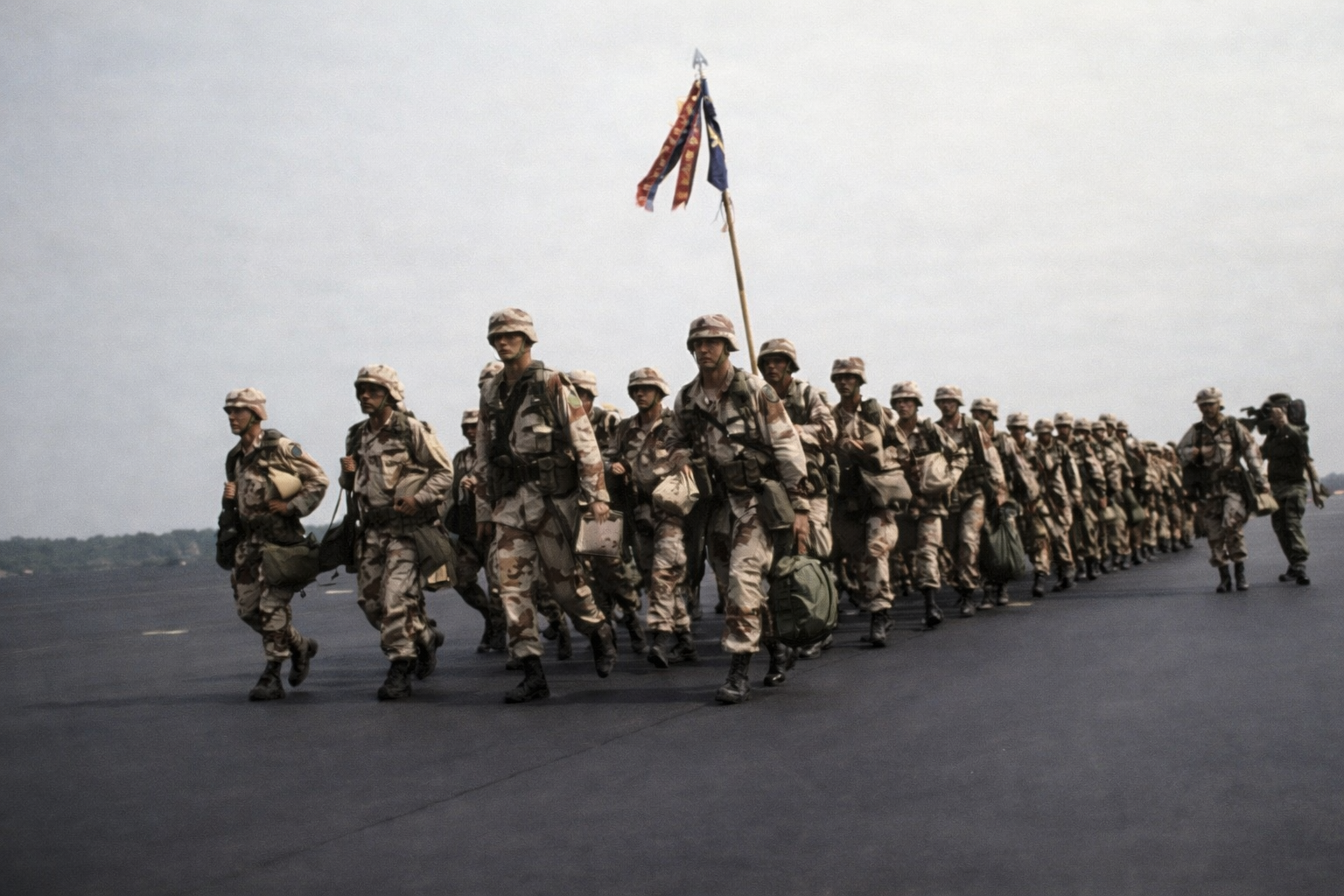
The division was alerted for deployment on November 8, 1990.
Under the command of Major General Thomas G. Rhame, more than 12,000 soldiers of the 1st Infantry Division (Mechanized) moved to Saudi Arabia as part of Operation Desert Shield, joining the U.S. VII Corps buildup against Iraqi forces occupying Kuwait.
The terrain was as unfamiliar as the enemy:
- flat, open desert with almost no cover
- extreme heat by day, freezing cold by night
- shifting sand that fouled engines and equipment
- vast distances with few landmarks
Unlike Vietnam, this was not a hidden enemy. The Iraqi Army was dug in, fortified, and waiting.
A Different Kind of Enemy
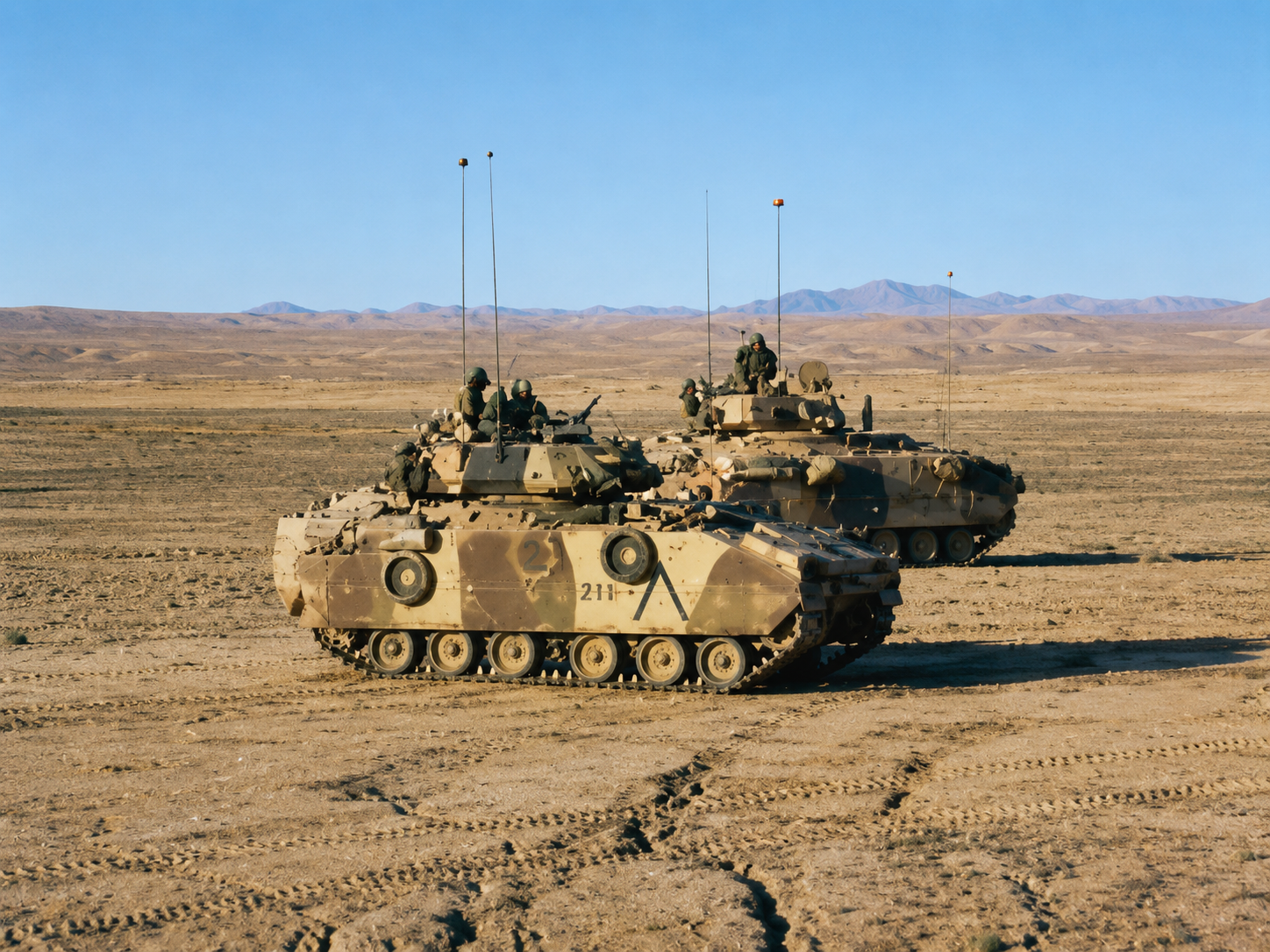
Iraqi forces had spent months constructing defensive lines along the Kuwaiti and Iraqi border.
These defenses included:
- minefields laid in dense belts
- barbed wire obstacles
- anti-tank ditches
- fortified berms and firing positions
It was conventional warfare, closer to the division's Cold War training than anything it had faced in a generation. But breaking through those defenses would still mean sending soldiers forward under direct fire.
On January 17, 1991, the air campaign began. For over a month, coalition aircraft struck Iraqi positions, command centers, and supply lines. The 1st Infantry Division continued to rehearse its central mission: breach the line, and open the way for the rest of VII Corps to attack the Iraqi Republican Guard.
The Breach
On the morning of February 24, 1991, the Big Red One led the way.
Task forces built around 3rd Battalion, 37th Armor; 2nd Battalion, 16th Infantry; and 4th Battalion, 37th Armor drove directly into the Iraqi defensive belt, clearing four lanes through minefields and wire under enemy artillery and small-arms fire.
The division tore through the Iraqi 26th Infantry Division, destroying it as an organized force and capturing more than 2,500 prisoners in the opening hours alone.
Combat engineers worked alongside armor and infantry, clearing mines by hand and by plow as the division pushed the breach open wide enough for the rest of the corps to pass through.
Fog of War
Victory did not come without cost or confusion.
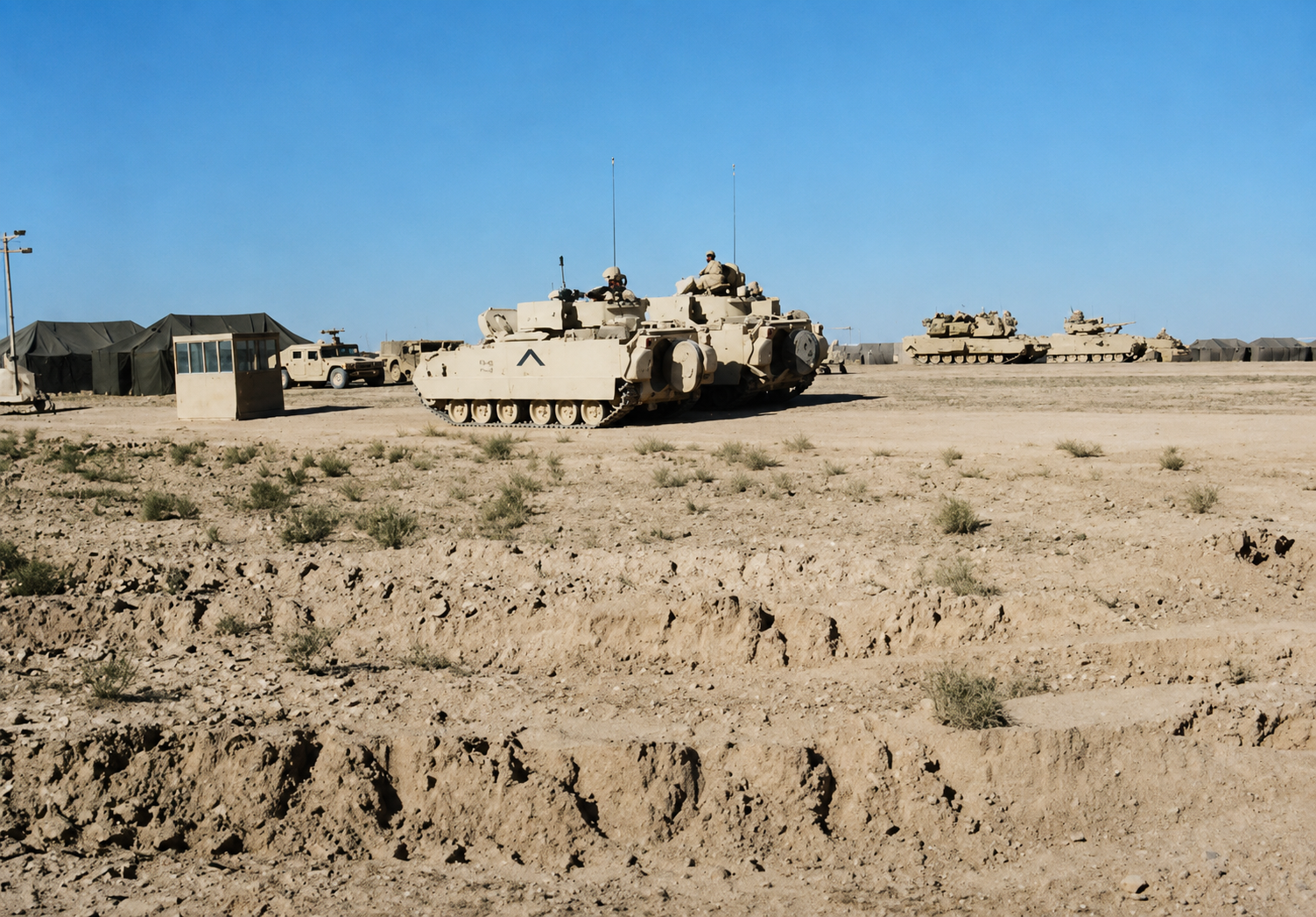
On February 17, days before the ground offensive began, an Apache helicopter mistakenly fired on a Bradley Fighting Vehicle and an M113 armored personnel carrier belonging to the division, killing two soldiers. It was a grim reminder that even a lopsided fight carries real danger — sometimes from an unexpected direction.
The division pressed on.
The Battle of Norfolk
By February 26, the Big Red One had turned east, driving toward the heart of Iraq's most capable force: the Republican Guard.
That night, 1st Brigade collided with the Tawakalna Division and the 37th Brigade of the Iraqi 12th Armored Division. What began as a meeting engagement grew into a division-level battle fought largely in darkness and blowing sand. By dawn, both Iraqi formations had been destroyed, along with more than 40 tanks and 40 infantry fighting vehicles.
The fighting continued into February 27, as the division — alongside the 2nd Armored Division (Forward) and British forces — engaged the remnants of the Tawakalna Division near the town of Norfolk in southern Iraq.
It became the largest tank battle of the war.
By the time it ended, the Tawakalna Division, once among Iraq's most powerful formations, had ceased to exist.
One Hundred Hours
The ground war lasted just four days.
A cease-fire was announced at 8:00 a.m. on February 28, 1991. In that span, the 1st Infantry Division alone had:
- destroyed more than 500 Iraqi tanks
- broken two Iraqi divisions and crippled a third
- captured more than 11,400 prisoners of war
It was a campaign fought and won in hours, not years.
A Different Kind of Victory
For a division that had fought an enemy it rarely saw in Vietnam, the Gulf War was almost the opposite experience.
Here, the enemy was visible, dug in, and
Leave a Comment