On June 6, 1944, Allied forces launched the largest amphibious invasion in history. Thousands of ships crossed the English Channel as soldiers prepared to storm the beaches of Normandy.
The operation, known as Operation Overlord was the beginning of the liberation of Western Europe.
But before the invasion forces could secure the beaches, one critical threat had to be eliminated.
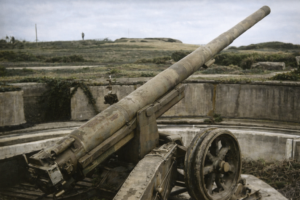
High above the coastline between Omaha Beach and Utah Beach stood a heavily fortified German artillery position known as Pointe du Hoc.
The guns positioned there had the potential to devastate Allied landing forces.
Destroying them became one of the most dangerous missions of D-Day.
The task fell to the U.S. Army Rangers.
A Fortress Above the Sea
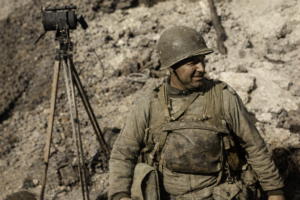
Pointe du Hoc was a natural stronghold.
The position sat atop sheer cliffs rising nearly 100 feet above the English Channel. German forces had reinforced the area with concrete bunkers, trenches, and machine-gun nests.
Six powerful 155-mm artillery guns were believed to be positioned there.
From this vantage point, those guns could fire directly onto the landing beaches below. If they remained operational, they could wreak havoc on the Allied invasion fleet and the soldiers storming ashore.
Neutralizing them before they could be used against the invasion force was essential.
The mission was assigned to the 2nd Ranger Battalion, commanded by James Earl Rudder.
Their orders were clear:
Land at the base of the cliffs.
Climb to the top.
Destroy the guns.
The Approach
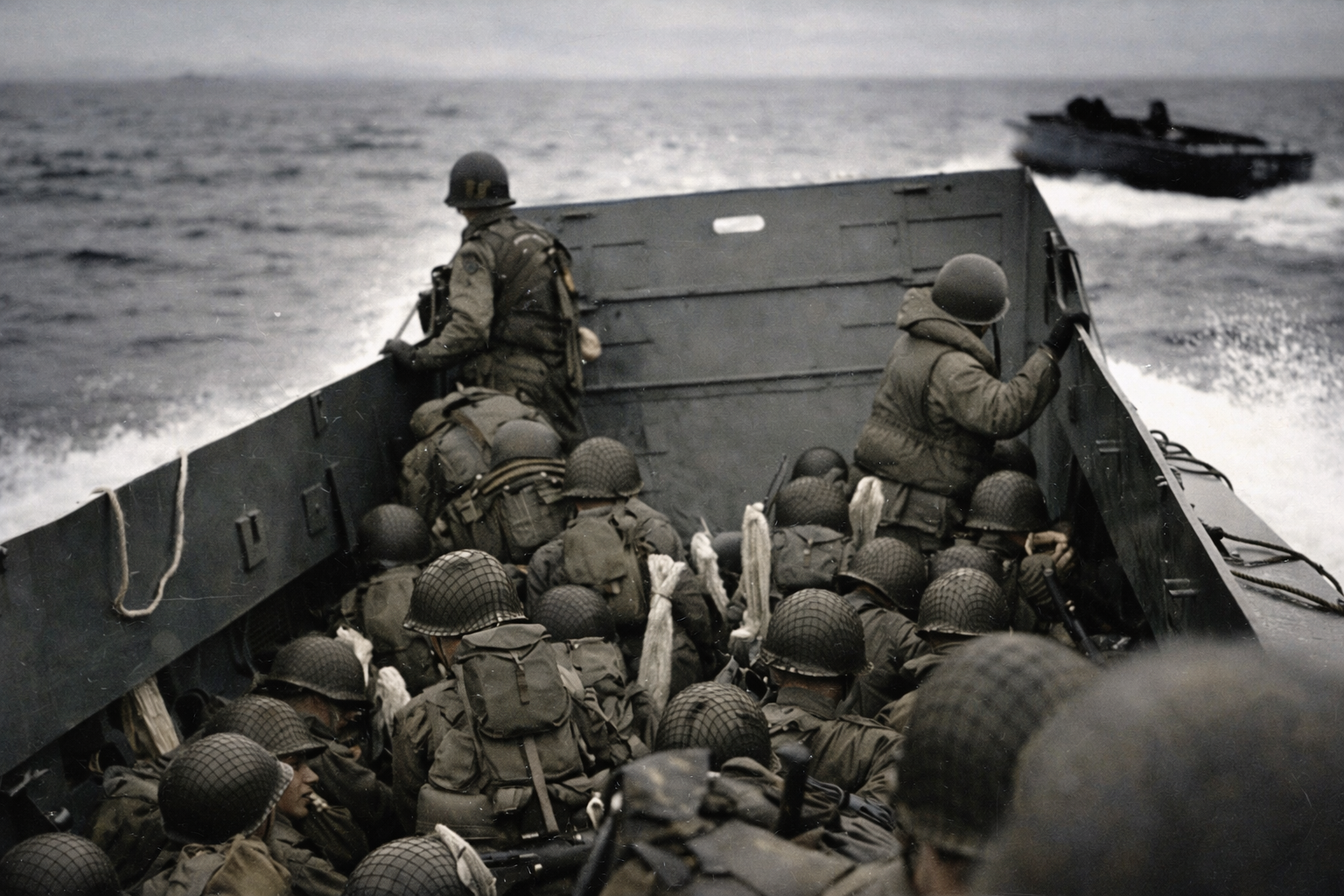
Before dawn on June 6, 1944, the Rangers boarded landing craft and headed toward the Normandy coast.
The sea was rough and visibility was poor. Strong currents pushed many of the boats off course, delaying the Rangers’ arrival at the cliffs.
Meanwhile, German defenders had already begun firing on approaching Allied forces.
When the Rangers finally reached the base of the cliffs at Pointe du Hoc, they faced a terrifying sight.
Towering rock walls rose straight up from the shoreline.
And enemy soldiers waited above.
Scaling the Cliffs
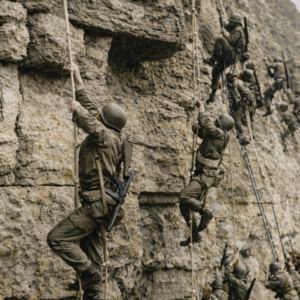
The Rangers began climbing almost immediately.
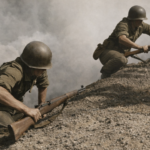
They used ropes, ladders mounted on rocket launchers, and grappling hooks to scale the cliff face. Some ladders were fired upward from landing craft, while others were raised by hand.
German defenders dropped grenades and fired machine guns down onto the climbers.
Several ropes were cut.
Some ladders fell.
Despite the chaos, the Rangers kept climbing.
Small groups reached the top of the cliffs and began clearing German trenches and bunkers. The fighting was close and brutal, often conducted with grenades and rifles at short range.
Within minutes, the Rangers had secured the immediate area around the cliff edge.
But when they reached the artillery positions, they discovered something unexpected.
The guns were gone.
The Search for the Guns
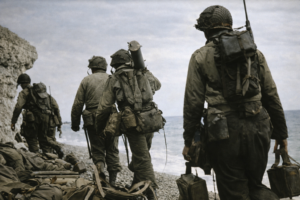
German forces had moved the artillery pieces inland before the invasion.
If the guns were reinstalled or brought back into action, they could still threaten the Allied beaches.
A small Ranger patrol began searching the surrounding countryside.
A few hundred yards inland, they found the missing artillery hidden along a hedgerow.
Using thermite grenades, the Rangers destroyed the guns before they could be used against the invasion.
The primary objective of the mission had been accomplished.
Holding the Position
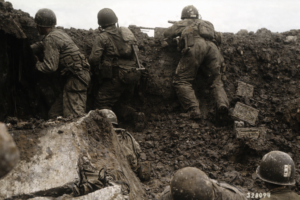
The Rangers’ ordeal was far from over.
Only about 200 Rangers had successfully reached the top of the cliffs. The rest had been delayed or diverted by rough seas and enemy fire.
For the next two days, the Rangers held their position against repeated German counterattacks.
Cut off and low on ammunition, they defended the captured ground while waiting for reinforcements from Omaha Beach.
German artillery and infantry assaults struck the Ranger positions repeatedly.
Casualties mounted.
By the time relief forces finally arrived, fewer than 100 Rangers remained capable of fighting.
One of the Most Daring Missions of the War
Despite the heavy losses, the assault at Pointe du Hoc achieved its objective.
The German guns that threatened the invasion beaches had been destroyed.
The Rangers had completed one of the most difficult missions of the Normandy invasion.
Their actions became one of the defining moments of D-Day.
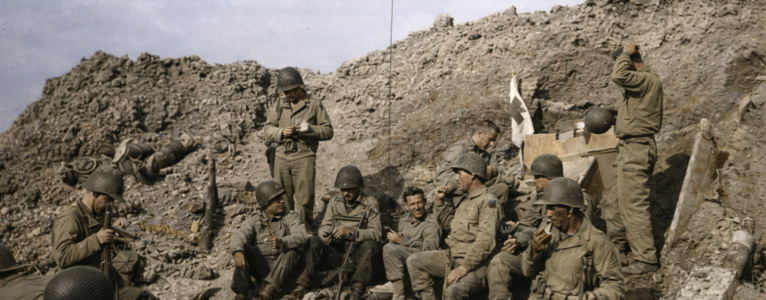
Today, the cliffs at Pointe du Hoc remain scarred with bomb craters and shattered bunkers, a lasting reminder of the battle fought there in 1944.
The mission demonstrated the same qualities that had defined the Rangers since their first combat operations in North Africa: speed, courage, and relentless determination.
Or, as the Rangers themselves say:
“Rangers Lead the Way.”
Next in the series:
Disaster and Heroism, the Rangers’ brutal battle at Battle of Cisterna during the Italian campaign.
Follow the Rangers even further in my book ‘Rangers, Normandy’.