Category: <span>Historical Posts</span>

Forged by Failure: How the 1st Armored Division Rebuilt Itself Under Fire in North Africa

Most histories of the U.S. Army’s early armored forces soften the truth. They use words like “growing pains,” “inexperience,” or “early challenges,” as if North Africa were a learning retreat instead of a battlefield that exposed every flaw in America’s pre-war doctrine. The 1st Armored Division didn’t simply “adapt” in …
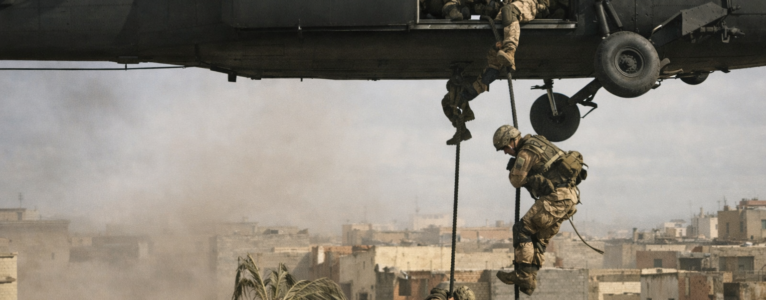
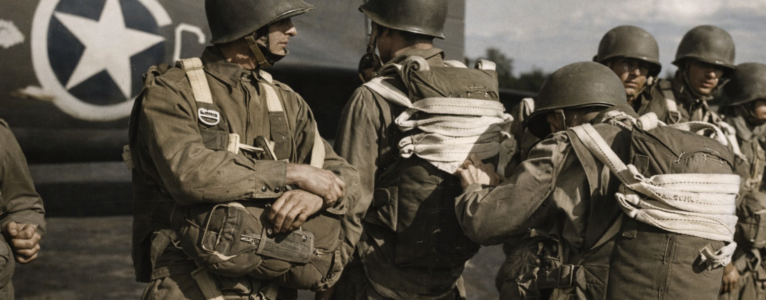
Rangers in the 1990s: From Desert Shield to the Battle of Mogadishu

This entry is part 12 of 13 in the series Rangers Through the Fire

By the early 1990s, the modern Ranger force had firmly established itself as one of the U.S. Army’s premier rapid-deployment units. The 75th Ranger Regiment had proven its capabilities during airborne assaults in Grenada and Panama, demonstrating that elite light infantry could seize critical objectives quickly and decisively. But the …

First in the Sky: How the 509th Parachute Infantry Battled Weather, Confusion, and Chaos in Operation Torch

When the 509th Parachute Infantry Battalion lifted off from English airfields on the night of November 7–8, 1942, they were about to make history, and nearly disaster. It was the first American airborne combat operation of World War II, part of Operation Torch, the Allied invasion of French North Africa. …

Grenada and Panama: Rangers Return to Combat

This entry is part 11 of 13 in the series Rangers Through the Fire

By the early 1980s, the modern Ranger force had spent nearly a decade preparing for combat. The battalions formed after Vietnam trained constantly for airborne assaults, airfield seizures, and rapid deployment missions. When the United States finally called upon the Rangers again, it would be in two dramatic Cold War …

The Birth of the Modern Ranger Regiment

This entry is part 10 of 13 in the series Rangers Through the Fire

When the Vietnam War ended in the early 1970s, the U.S. Army faced a difficult transition. Years of jungle warfare had reshaped how American forces fought, but many of the specialized units that proved effective during the conflict were disbanded as the war came to a close. Among them were …

Rangers in Vietnam: Long Range Recon Patrols and the Evolution of Modern Special Operations

This entry is part 9 of 13 in the series Rangers Through the Fire

By the time the United States entered the Vietnam War in large numbers during the 1960s, the Ranger tradition had already passed through two major conflicts. The Rangers of World War II had carried out daring assaults across North Africa and Europe, while Ranger companies in Korea proved the value …

Rangers in Korea: The Return of America’s Elite Infantry

This entry is part 8 of 13 in the series Rangers Through the Fire

When World War II ended in 1945, the U.S. Army Rangers had already built a reputation for daring missions and aggressive combat leadership. From the night raids of North Africa to the cliffs of Normandy, Ranger battalions had proven the value of elite light infantry. But after the war, the …

Climbing the Cliffs: Rangers at Pointe du Hoc

This entry is part 5 of 13 in the series Rangers Through the Fire

On June 6, 1944, Allied forces launched the largest amphibious invasion in history. Thousands of ships crossed the English Channel as soldiers prepared to storm the beaches of Normandy. The operation, known as Operation Overlord was the beginning of the liberation of Western Europe. But before the invasion forces could …

Baptism of Fire: The First Rangers in North Africa

This entry is part 2 of 13 in the series Rangers Through the Fire

By the fall of 1942, the newly formed U.S. Army Rangers had completed their grueling training in Scotland. Volunteers had been pushed to their limits at the Commando training center, learning night raids, amphibious assaults, demolitions, and small-unit tactics. Now it was time to find out if the experiment worked. …

Before the Rangers: America’s Need for Elite Infantry

This entry is part 1 of 13 in the series Rangers Through the Fire

In modern war films and documentaries, elite soldiers moving silently through the darkness have become a familiar image. Small teams striking deep behind enemy lines. Fast assaults on critical targets. Soldiers trained to operate where conventional forces cannot. Today, the United States Army Rangers are synonymous with that kind of …