March 24, 1945, Germany
In the final months of World War II, the Allies launched one last massive airborne operation deep inside Germany.
It was called Operation Varsity.
And unlike earlier airborne assaults, this one would unfold in broad daylight, under the guns of a fully alert enemy.
The Final Barrier: The Rhine
By March 1945, Allied forces had pushed all the way to the Rhine River.
It was the last major natural defensive line protecting the heart of Germany.
If the Allies could cross it, the war in Europe would effectively be over.
The plan was bold:
- A massive river crossing (Operation Plunder)
- Combined with a large-scale airborne drop behind German lines
- Designed to shatter defenses before they could react
That airborne component became Operation Varsity.
A Different Kind of Airborne Assault
Unlike Normandy or Market Garden, Varsity wasn’t spread out over multiple days.
It was designed as a single, overwhelming strike.
More than 16,000 airborne troops would land within a tight area east of the Rhine.
Their objectives were clear:
- Capture key bridges and roads
- Secure high ground near the Diersfordter Wald
- Disrupt German artillery and reserves
- Prevent any organized counterattack
This wasn’t a gamble.
It was brute force, delivered all at once.
British and American Forces Together
Operation Varsity brought together two elite formations:
- The British 6th Airborne Division
- The U.S. 17th Airborne Division
They would be dropped directly into heavily defended territory, closer to German lines than in any previous Allied airborne operation.
That meant one thing: Immediate combat on landing.
Into Heavy Fir
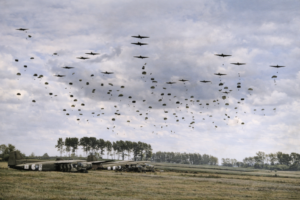
On the morning of March 24, 1945, the sky filled with aircraft.
Hundreds of transport planes and gliders crossed the Rhine.
They weren’t flying into surprise.
They were flying into a storm of anti-aircraft fire.
- Planes were hit before reaching drop zones
- Gliders broke apart under fire
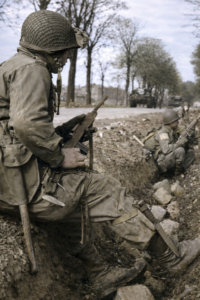
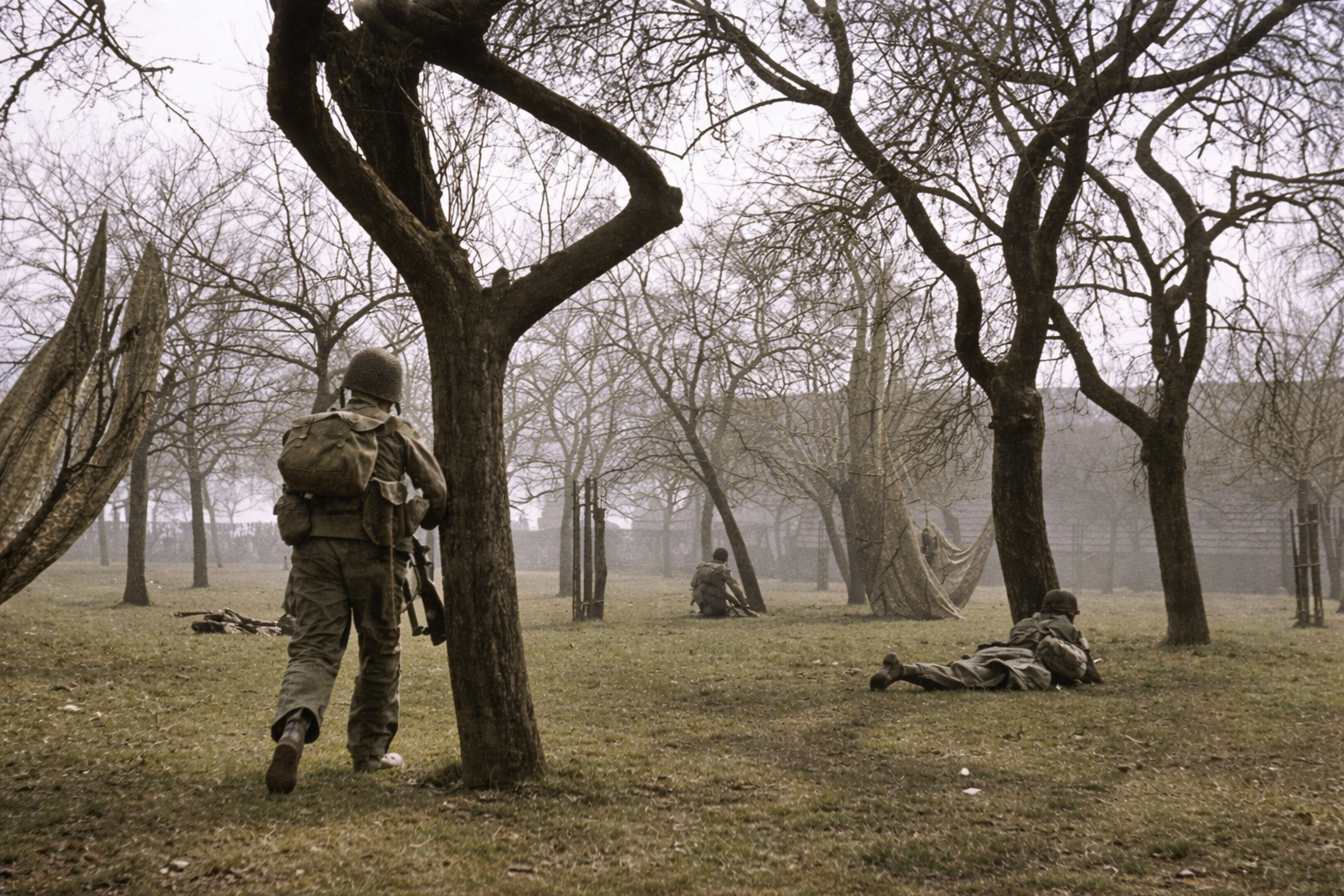
- Paratroopers landed under direct engagement
Entire units found themselves fighting within minutes of hitting the ground.
There was no time to regroup.
No time to reorganize.
Just fight.
The Cost of Speed
The decision to drop in daylight achieved one thing:
Concentration.
Troops landed close to their objectives and were able to push quickly.
But it came at a price.
Operation Varsity suffered heavy casualties in a very short time:
- Aircraft losses were significant
- Many paratroopers were killed or wounded during descent
- Glider troops faced especially brutal landings
It was one of the most intense airborne insertions of the war.
Breaking the German Line
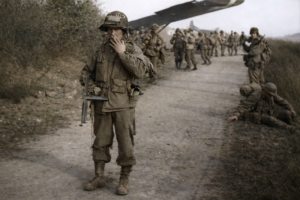
Despite the losses, the operation worked.
Airborne troops:
- Captured key terrain
- Secured routes for advancing ground forces
- Disrupted German defensive coordination
Within hours, link-up with ground forces advancing under Operation Plunder began.
The Rhine had been crossed.
Germany was now exposed.
Why Operation Varsity Still Matters
Operation Varsity is often overshadowed by Normandy and Market Garden.
But it represents something different:
- A fully coordinated airborne and ground assault
- Lessons learned from earlier failures
- Overwhelming force used with precision timing
It was not experimental.
It was refined.
And it worked.
The Beginning of the End
After Varsity, Allied forces advanced rapidly into Germany.
Within weeks:
- German resistance began collapsing
- Major cities fell
- The war in Europe came to an end
Operation Varsity wasn’t the most famous airborne operation.
But it was one of the most decisive.
Final Thoughts
Operation Varsity proved that airborne forces, when used correctly, could deliver overwhelming impact.
But it also showed the cost of that power.
Men dropped into battle in full view of the enemy, because speed mattered more than safety.
And in March 1945, that trade was enough to break the last line of Nazi Germany.