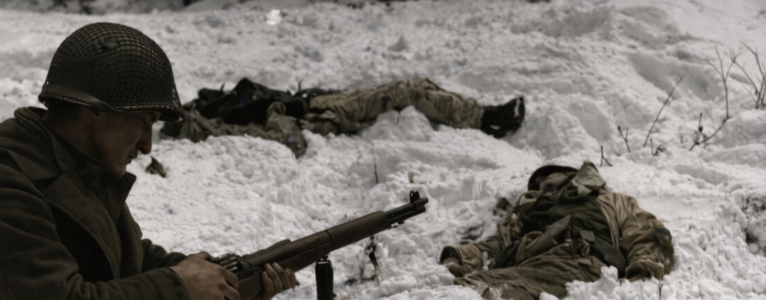
By late 1944, the war in Europe had entered its final and most brutal phase. Allied forces had landed in Normandy, liberated much of France, and pushed toward the borders of Germany.
For the U.S. Army Rangers, the battles of North Africa, Sicily, and Normandy had already cemented their reputation as elite assault troops.
Now the war would take them into some of the most difficult fighting of the entire conflict.
The Rangers After Normandy
The 2nd Ranger Battalion had already become famous for its daring assault on the cliffs of Pointe du Hoc during the Normandy Landings.
After the breakout from Normandy, Ranger units continued fighting across France and into Belgium as Allied forces advanced toward Germany.
Their missions remained similar to those they had carried out earlier in the war:
- spearheading attacks against fortified positions
- conducting reconnaissance patrols
- securing key terrain ahead of advancing divisions
But as Allied armies approached the German border, the fighting grew more intense.
Into the Hürtgen Forest
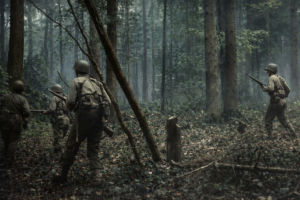
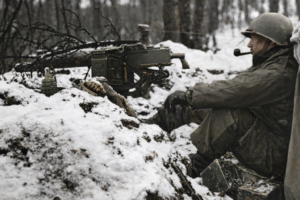
One of the most brutal campaigns fought by American forces in Western Europe took place in the dense woodlands along the German frontier.
This struggle, known as the Battle of Hürtgen Forest became one of the longest and most costly battles fought by the U.S. Army in World War II.
The terrain was unforgiving.
Dense forest limited visibility, muddy roads slowed movement, and German forces had fortified the region with bunkers, artillery positions, and extensive minefields.
Perhaps the most deadly threat came from artillery shells exploding high in the treetops.
These “tree bursts” scattered fragments downward, causing devastating casualties among troops fighting below.
American units struggled to advance through the forest while facing determined German resistance.
Among the most important objectives in the region was a wooded hill that overlooked much of the surrounding terrain.
The Battle for Hill 400
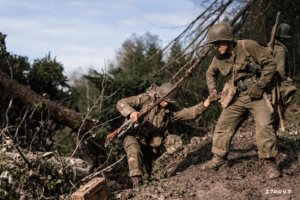
In December 1944, the 2nd Ranger Battalion received orders to capture a key position known as Hill 400.
The hill, also called Bergstein, dominated the surrounding landscape and provided German forces with an excellent observation point for directing artillery fire across the battlefield.
Capturing it would deny the Germans that advantage.
On December 7, 1944, Rangers launched a determined assault up the wooded slopes of the hill.
Fighting was intense.
German defenders had prepared strong defensive positions and used machine guns, mortars, and artillery to slow the Ranger advance.
Despite the resistance, the Rangers pushed forward and eventually seized the summit.
But capturing the hill was only the beginning.
German forces launched repeated counterattacks in an effort to retake the position. Rangers held the ground for several days while facing constant artillery bombardment and infantry assaults.
Outnumbered and under heavy pressure, the Rangers refused to give up the hill.
Their defense of Hill 400 became one of the most remarkable small-unit actions of the war.
The Ardennes Offensive
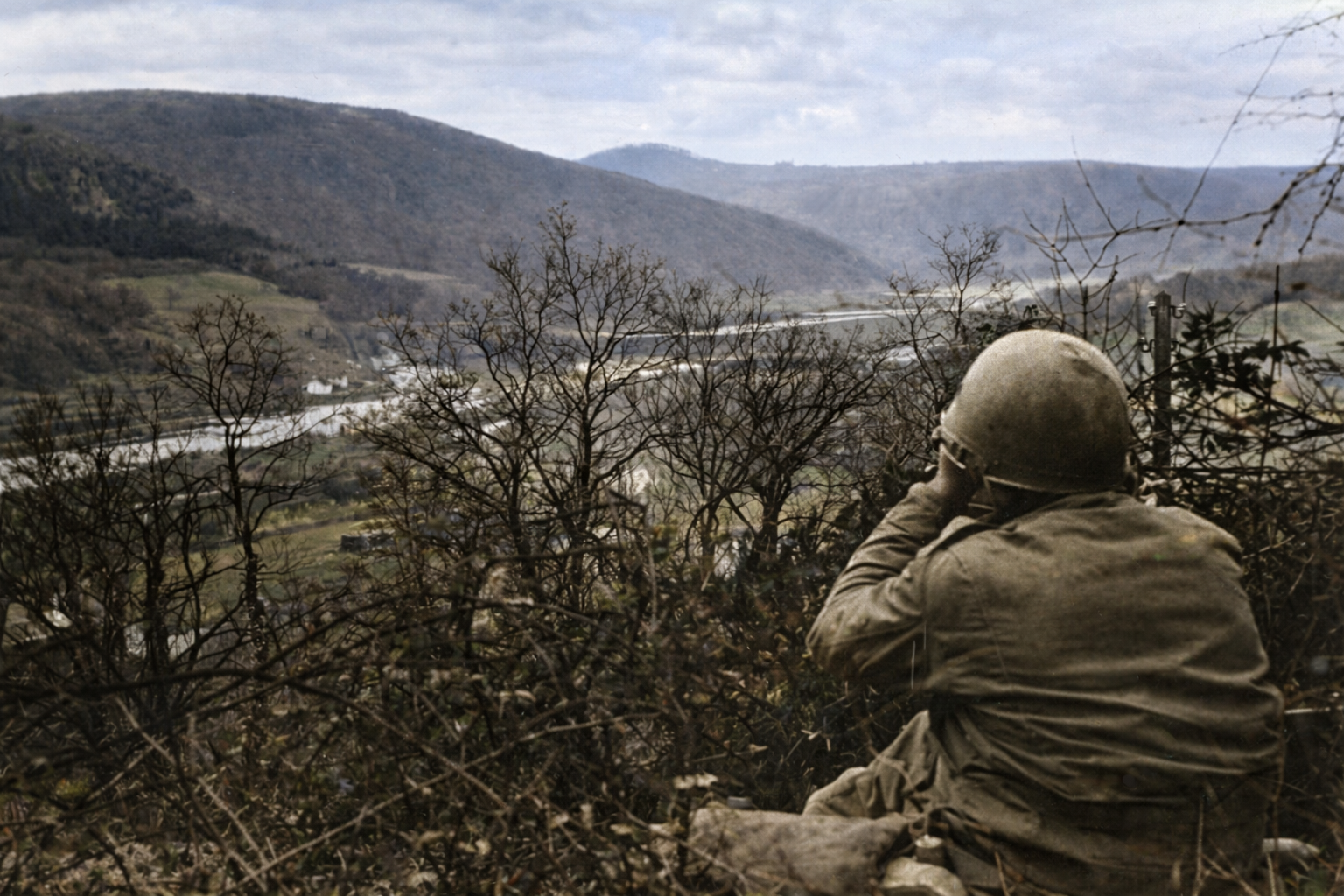
Only days after the battle for Hill 400, German forces launched a massive surprise attack through the Ardennes region.
This offensive, known as the Battle of the Bulge, temporarily halted the Allied advance and created a dangerous bulge in the front lines.
American units rushed to reinforce defensive positions as German armored divisions pushed westward.
Ranger units, already fighting in the region, contributed to defensive operations and reconnaissance missions as Allied forces worked to stop the German advance.
By early 1945, the German offensive had been halted and the Allies resumed their push into Germany.
The Final Advance
With the failure of the Ardennes offensive, German forces were increasingly on the defensive.
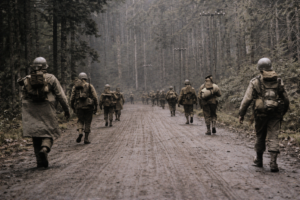
Allied armies crossed the Rhine River and began advancing deep into Germany itself.
Ranger units continued to operate alongside larger American formations, conducting patrols and supporting offensive operations during the final months of the war.
Although German resistance remained fierce in some areas, the collapse of the Nazi regime was becoming inevitable.
Victory in Europe
In May 1945, Germany formally surrendered to the Allied forces.
The war in Europe was over.
For the Rangers who had fought from North Africa to the forests of Germany, the victory marked the end of years of intense combat across multiple campaigns.
Their actions, from the cliffs of Normandy to the defense of Hill 400, had helped establish a lasting reputation for courage, discipline, and aggressive leadership.
The End of the Wartime Rangers
After the war, the U.S. Army began reducing its wartime forces.
Like many specialized units created during World War II, the Ranger battalions were eventually disbanded.
But their legacy endured.
The experience gained by Ranger units during the war, ,and the reputation they earned on battlefields across Europe and North Africa, ensured that the Ranger concept would return when the United States faced future conflicts.
And when that moment came, a new generation of Rangers would once again lead the way.
Next in the series:
Rangers in Korea, how the Ranger tradition returned during the Korean War.