
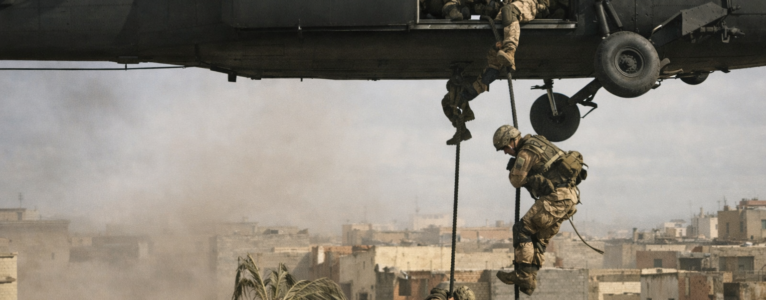
By the early 1990s, the modern Ranger force had firmly established itself as one of the U.S. Army’s premier rapid-deployment units. The 75th Ranger Regiment had proven its capabilities during airborne assaults in Grenada and Panama, demonstrating that elite light infantry could seize critical objectives quickly and decisively.
But the next decade would present a different kind of challenge.
Instead of large-scale Cold War interventions, Rangers would face regional crises that demanded flexibility, rapid response, and close cooperation with other special operations units.
Two events in particular defined Ranger operations during the early 1990s: the Gulf War and the battle in Mogadishu.
Rangers During the Gulf War
When Iraq invaded Kuwait in August 1990, the United States quickly began deploying forces to Saudi Arabia as part of Operation Desert Shield.
Among the units sent to the region were elements of the 75th Ranger Regiment.
The Rangers’ role was primarily strategic.
They served as a rapid-response force prepared to conduct high-risk missions if the conflict escalated. Their training made them especially suited for operations such as:
- airborne assaults on enemy airfields
- raids against key Iraqi installations
- securing landing zones for follow-on forces
During the planning stages for Operation Desert Storm, several contingency plans considered using Rangers to seize airfields in Kuwait or western Iraq.
However, the war unfolded differently than expected.
The coalition air campaign severely weakened Iraqi forces before the ground war began. When coalition troops launched their offensive in February 1991, Iraqi defenses collapsed quickly.
The ground campaign lasted only about 100 hours.
Because of the speed of the coalition advance, the large airborne Ranger assaults that had been planned were never required.
Still, the Rangers’ presence in the theater demonstrated their role as a global strike force capable of deploying rapidly to crisis zones.
A Different Kind of Mission: Somalia
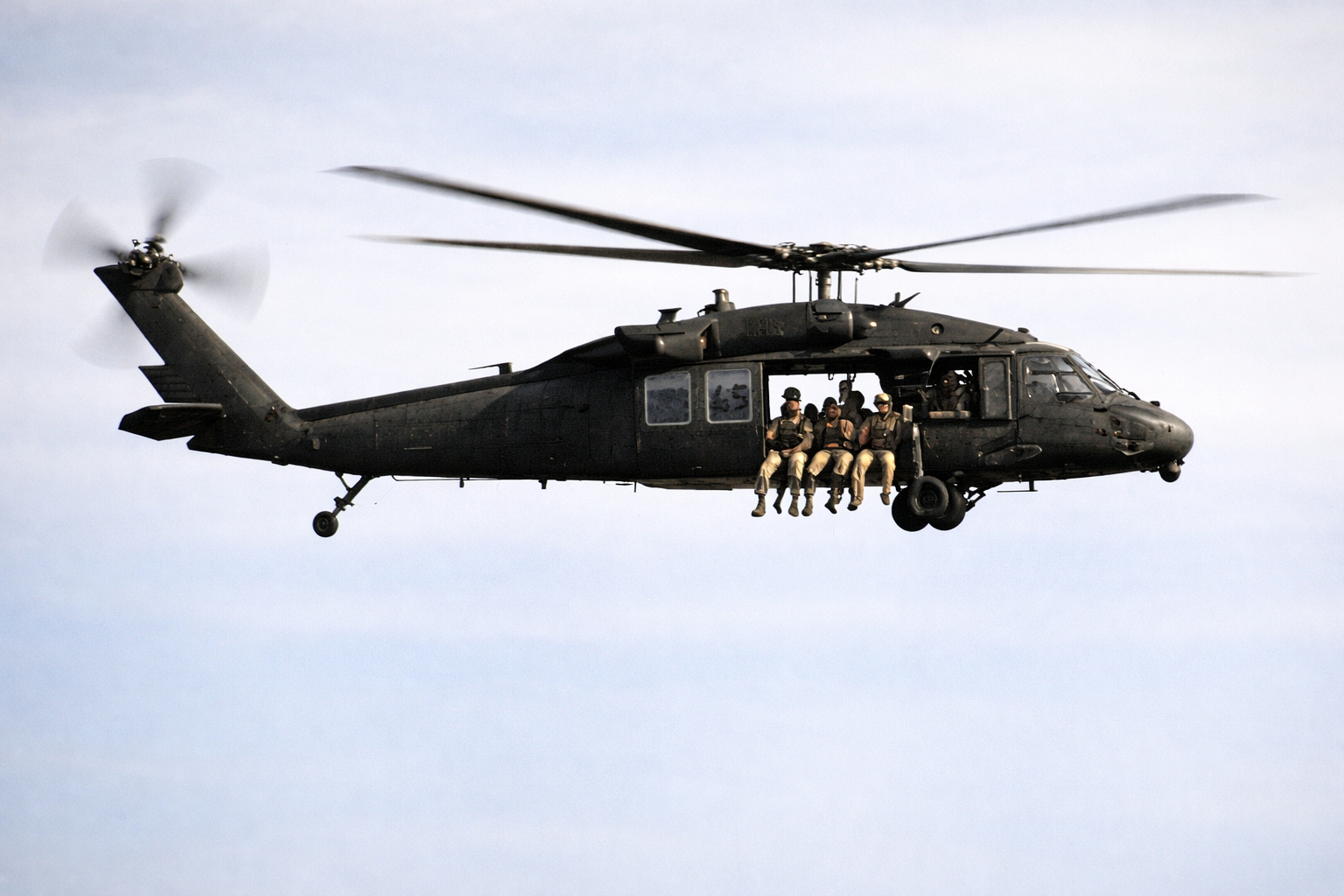
Just two years later, Rangers would find themselves in a very different type of operation.
In 1993, the United States deployed forces to Somalia as part of a United Nations mission aimed at stabilizing the country after years of civil war.
The situation in the Somali capital, Mogadishu, had deteriorated as powerful warlords competed for control.
To capture one of these leaders, Mohamed Farrah Aidid, the United States formed a special task force that combined several elite units.
This force became known as Task Force Ranger.
It included Rangers, Delta Force operators, Army special operations aviation units, and other supporting elements.
The Battle of Mogadishu
On October 3, 1993, Task Force Ranger launched a raid in Mogadishu to capture several of Aidid’s key lieutenants.
The operation initially followed a familiar pattern.
Delta Force operators would assault the target building while Rangers secured the surrounding streets and established defensive positions.
Helicopters would then extract the assault force.
But the mission quickly went wrong.
During the operation, Somali fighters shot down two U.S. Black Hawk helicopters, turning what was meant to be a short raid into a desperate overnight battle.
The resulting fight, known as the Battle of Mogadishu became one of the most intense urban battles involving U.S. forces since Vietnam.
Rangers and other members of Task Force Ranger fought through the streets of Mogadishu for nearly 18 hours while attempting to rescue the crews of the downed helicopters and evacuate wounded soldiers.
Despite being heavily outnumbered, the Rangers held their positions and continued the rescue effort until relief forces arrived.
The battle resulted in 18 American soldiers killed and dozens wounded, but the mission demonstrated the extraordinary courage and determination of the units involved.
Rangers and Modern Special Operations
The experiences of the 1990s showed how the role of the Rangers was evolving.
During the Cold War, their primary mission centered on airborne assaults and airfield seizures.
But operations like Mogadishu revealed that Rangers were equally capable of supporting complex joint special operations missions.
Working alongside Delta Force, special operations aviation, and other units, the Rangers became an essential component of America’s rapidly growing special operations capabilities.
This integration would become even more important in the decades ahead.
A Regiment Ready for a New Era
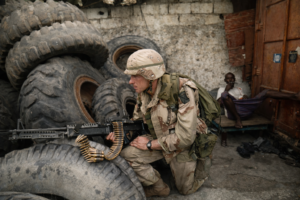
By the end of the 1990s, the 75th Ranger Regiment had matured into a highly professional, permanently ready combat force.
Its soldiers trained constantly for missions ranging from airborne assaults to counterterrorism raids.
That preparation would soon be tested again.
After the attacks of September 11, 2001, the Rangers would become one of the most heavily deployed combat units of the modern era.
From Afghanistan to Iraq, they would conduct thousands of missions in the global fight against terrorism.
But the lessons learned during the Gulf War and the streets of Mogadishu helped shape the modern Rangers that would face those challenges.
Next in the series:
Rangers in the War on Terror, how the 75th Ranger Regiment became one of the most frequently deployed combat units of the 21st century.
The Ranger operation are part of the Ranger lead the way series.
Related posts:
 Old Hickory in Battle: The Full History of the 30th Infantry Division in WWI and WWII
 Italians in WWII: Divided Loyalties at Home and Abroad
 The Great Raid: How the 6th Rangers, Alamo Scouts, and Filipino Guerrillas Pulled Off WWII’s Boldest POW Rescue
 The Truth About WWII Ranger Units vs. Hollywood Rangers