By the time the United States entered the Vietnam War in large numbers during the 1960s, the Ranger tradition had already passed through two major conflicts. The Rangers of World War II had carried out daring assaults across North Africa and Europe, while Ranger companies in Korea proved the value of elite light infantry in rugged terrain.
But the war in Southeast Asia demanded something different.
Vietnam was not a war of front lines and large battlefield maneuvers. Instead, it was a conflict fought in dense jungle, remote mountains, and contested villages where enemy forces could appear and disappear with little warning.
To survive in that environment, the U.S. Army needed small teams capable of operating deep behind enemy lines.
The solution came in the form of Long Range Reconnaissance Patrols, better known as LRRP teams.
The Rise of the LRRP
In the early years of the war, American commanders struggled to locate enemy units moving through South Vietnam’s jungles and mountains. Conventional infantry patrols often lacked the stealth and endurance needed to track enemy movements over long distances.
In response, specialized reconnaissance units were created within U.S. divisions and brigades.
These units became known as LRRP teams.
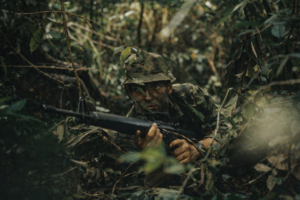
Their mission was simple in theory but extremely dangerous in practice: infiltrate deep into enemy-controlled territory, observe and report enemy activity, and avoid detection whenever possible.
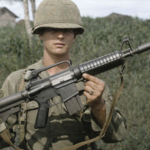
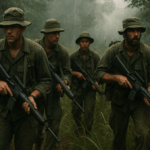
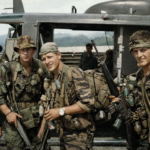
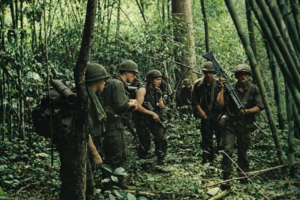
LRRP teams were small, typically composed of four to six soldiers. Their survival depended on stealth, discipline, and careful movement through terrain that often favored the enemy.
Operating Deep Behind Enemy Lines
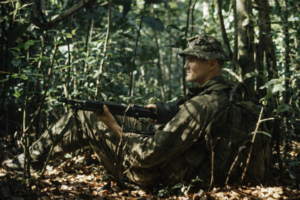
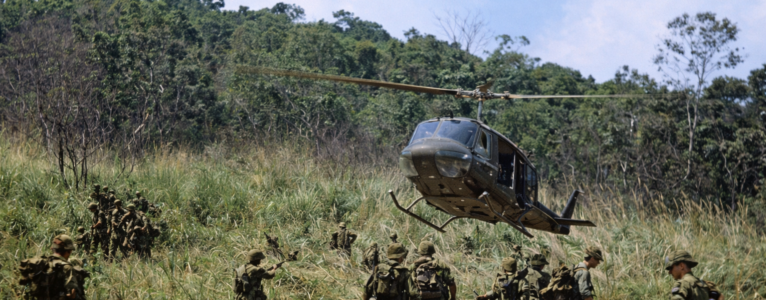
LRRP patrols were often inserted by helicopter into remote areas where enemy forces were suspected to be operating. Once on the ground, the teams would move slowly and quietly through the jungle, establishing hidden observation positions along known trails or infiltration routes.
Their primary mission was reconnaissance.
LRRPs watched for signs of enemy movement, fresh tracks, campfires, supply caches, or troop formations. When they located enemy units, they reported the information back to headquarters, allowing larger American forces to plan air strikes or ground operations.
But many patrols did not remain hidden for long.
If discovered, LRRP teams could quickly find themselves surrounded by larger enemy forces. In those moments, survival depended on speed, coordination, and the ability to fight their way out of an ambush.
Despite the risks, these small patrols became one of the most valuable intelligence tools available to American commanders in Vietnam.
LRRP Units Within Infantry Divisions
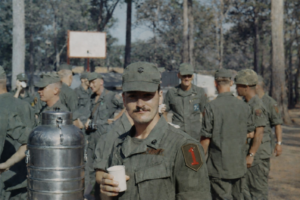
In the early years of the Vietnam War, Long Range Reconnaissance Patrol units were not organized as Rangers. Instead, they were small reconnaissance detachments attached directly to large U.S. infantry divisions and field forces operating across South Vietnam.
Divisions such as the 1st Infantry Division, 101st Airborne Division, and 25th Infantry Division each formed their own LRRP platoons or companies.
These units served as the “eyes and ears” of the division.
While regular infantry battalions conducted large search-and-destroy operations, LRRP teams moved far ahead of the main forces. Their job was to locate enemy concentrations, monitor infiltration routes, and identify hidden base camps deep in the jungle.
Because each division controlled its own LRRP element, the patrol teams became extremely familiar with their specific operating areas. They learned the terrain, enemy movement patterns, and key jungle trail networks used by Viet Cong and North Vietnamese Army forces.
This decentralized structure worked well during the early stages of the war.
From LRRP to Rangers
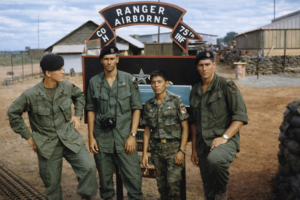
As the war progressed, the Army began reorganizing its reconnaissance units.
In 1969, many LRRP units were redesignated as Ranger companies under the 75th Infantry Regiment.
This move was intended to preserve the historic Ranger lineage while recognizing the specialized role these units played in Vietnam.
Each Ranger company was attached to a major U.S. division or field force operating in Vietnam. Among the most notable were:
- Company N (Ranger), 75th Infantry Regiment
- Company L (Ranger), 75th Infantry Regiment
- Company F (Ranger), 75th Infantry Regiment
Although the name had returned, their mission remained largely the same: deep reconnaissance patrols and intelligence gathering.
These Ranger companies operated some of the most dangerous patrols of the Vietnam War.
The Reality of LRRP Missions
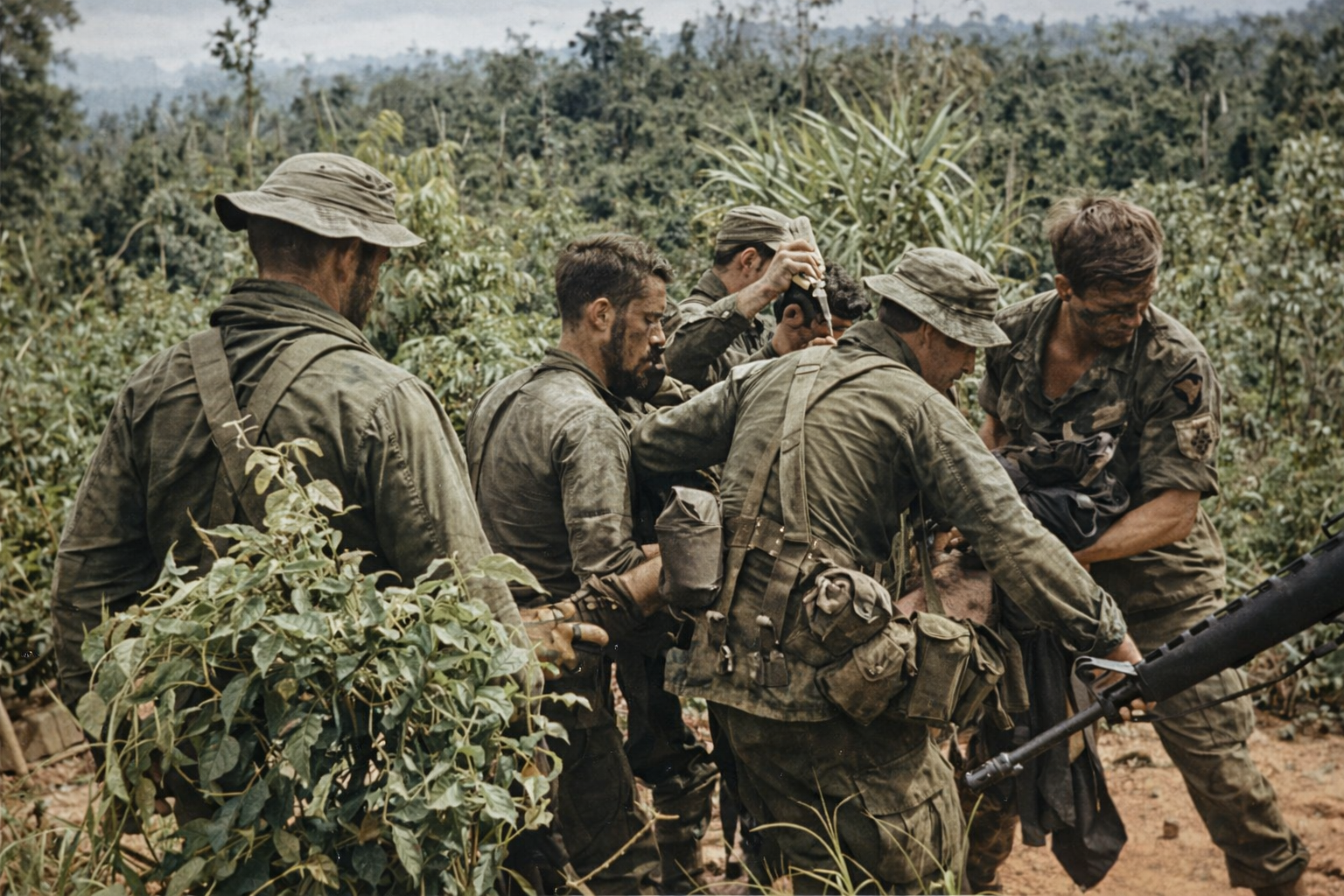
A typical LRRP patrol might last several days.
Teams carried only the equipment they could move silently through the jungle with: rifles, radios, limited food and water, and sometimes claymore mines for defensive positions.
Every movement had to be deliberate.
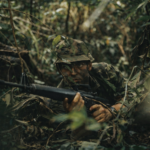
Branches broken in the wrong place or footprints left on a trail could reveal their presence. Many patrols remained hidden for hours or even days while observing enemy movements.
If compromised, the teams often called for helicopter extraction while defending their position against enemy forces.
Some of the most dramatic battles of the Vietnam War began with a small LRRP patrol suddenly fighting for survival deep in enemy territory.
These missions demanded exceptional discipline and mental toughness.
Not every soldier was suited for that kind of warfare.
The Evolution of Modern Special Operations
The experience gained by LRRP and Ranger units in Vietnam helped shape the future of American special operations forces.
The war demonstrated the importance of:
- small, highly trained teams
- deep reconnaissance behind enemy lines
- rapid helicopter insertion and extraction
- close coordination with air power
These lessons influenced the development of later U.S. special operations units and tactics.
After the Vietnam War ended, the Army began rebuilding its Ranger capability.
In 1974, the modern 75th Ranger Regiment was established, combining the heritage of the World War II Rangers with the reconnaissance and small-unit tactics refined in Vietnam.
The new Ranger battalions would go on to play key roles in operations around the world.
A Legacy Forged in the Jungle
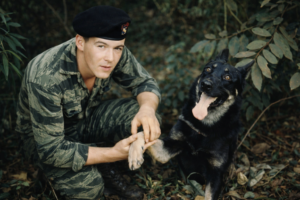
The Rangers of Vietnam did not conduct the dramatic cliff assaults of Normandy or the large-scale raids of World War II.
Instead, they fought a quieter and often more dangerous war.
Small teams moving silently through dense jungle.
Watching enemy trails.
Calling in strikes.
Surviving against the odds when discovery meant fighting outnumbered.
Their missions demanded patience, discipline, and courage.
And the lessons they learned in Vietnam helped shape the modern American approach to special operations warfare.
Today’s Rangers, still guided by the motto “Rangers Lead the Way” carry forward a legacy built not only on famous battles, but also on the quiet, deadly patrols of the Vietnam War.
Next in the series:
The Birth of the Modern Ranger Regiment, how the U.S. Army rebuilt the Rangers after Vietnam and created the elite force that exists today.
If you want step into the shoes on an LRRP team, consider reading my book.