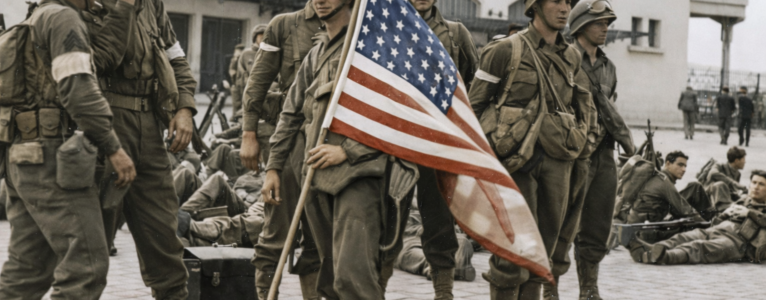
By the fall of 1942, the newly formed U.S. Army Rangers had completed their grueling training in Scotland. Volunteers had been pushed to their limits at the Commando training center, learning night raids, amphibious assaults, demolitions, and small-unit tactics.
Now it was time to find out if the experiment worked.
The Rangers were about to face their first real test of combat.
That test would come during the Allied invasion of North Africa, Operation Torch, the first major American offensive against Axis forces in the European theater of World War II.
The Allied Plan

In November 1942, Allied leaders launched a massive amphibious invasion across French North Africa. American and British forces would land simultaneously at multiple points along the coast of Morocco and Algeria.
The goal was ambitious.
By seizing North Africa, the Allies could:
- Trap German and Italian forces between advancing armies
- Secure control of the Mediterranean
- Prepare for the eventual invasion of southern Europe
But the landings carried significant risk.
Many coastal defenses were guarded by artillery batteries capable of firing directly onto the invasion beaches. If those guns remained operational during the landings, they could devastate the approaching transports and landing craft.
One such target stood near the Algerian port of Arzew.
Destroying it became the Rangers’ first mission.
A Night Assault at Arzew

The mission fell to the 1st Ranger Battalion, commanded by William O. Darby.
Darby’s Rangers were tasked with neutralizing a set of coastal artillery batteries overlooking the landing area near Arzew, Algeria.
The attack would happen in darkness.
Just after midnight on November 8, 1942, the Rangers approached the shore aboard British landing craft. The sea was rough, the coastline unfamiliar, and the men had never faced combat before.
If the landing failed, the Rangers would be isolated on hostile ground.
As the boats neared the beach, the soldiers climbed down cargo nets, carrying rifles, grenades, and demolition charges.
The landing began silently.
Moving Inland

Once ashore, the Rangers formed up quickly and moved inland toward the gun positions.
The terrain was rough and unfamiliar. Darkness concealed both friend and foe. Any mistake could alert the defenders before the Rangers reached their objective.
But the training at Achnacarry Castle had prepared them well.
Moving in small groups, the Rangers advanced toward the artillery positions guarding the coastline.
The defenders were taken by surprise.
Within minutes, the Rangers launched a coordinated assault on the gun emplacements. Explosives were placed on the artillery pieces while other soldiers secured the surrounding positions.
The attack was swift and violent.
By the time the fighting ended, the coastal guns had been destroyed.
A Successful First Mission
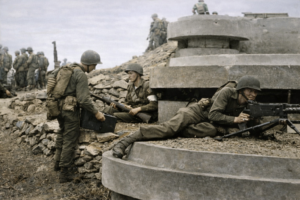
The destruction of the batteries cleared the way for Allied landing forces approaching the beaches near Arzew.
The Rangers had accomplished their mission.
For many of the men, the assault at Arzew had lasted less than an hour. But in that short time, the unit had proven something important.
The Rangers were not just an experiment.
They were capable of carrying out the kind of high-risk missions that conventional infantry units could not easily perform.
News of the success spread quickly through Allied command.
Darby’s battalion soon gained a reputation for speed, discipline, and aggressive action.
More missions followed.
The Rangers Earn Their Name
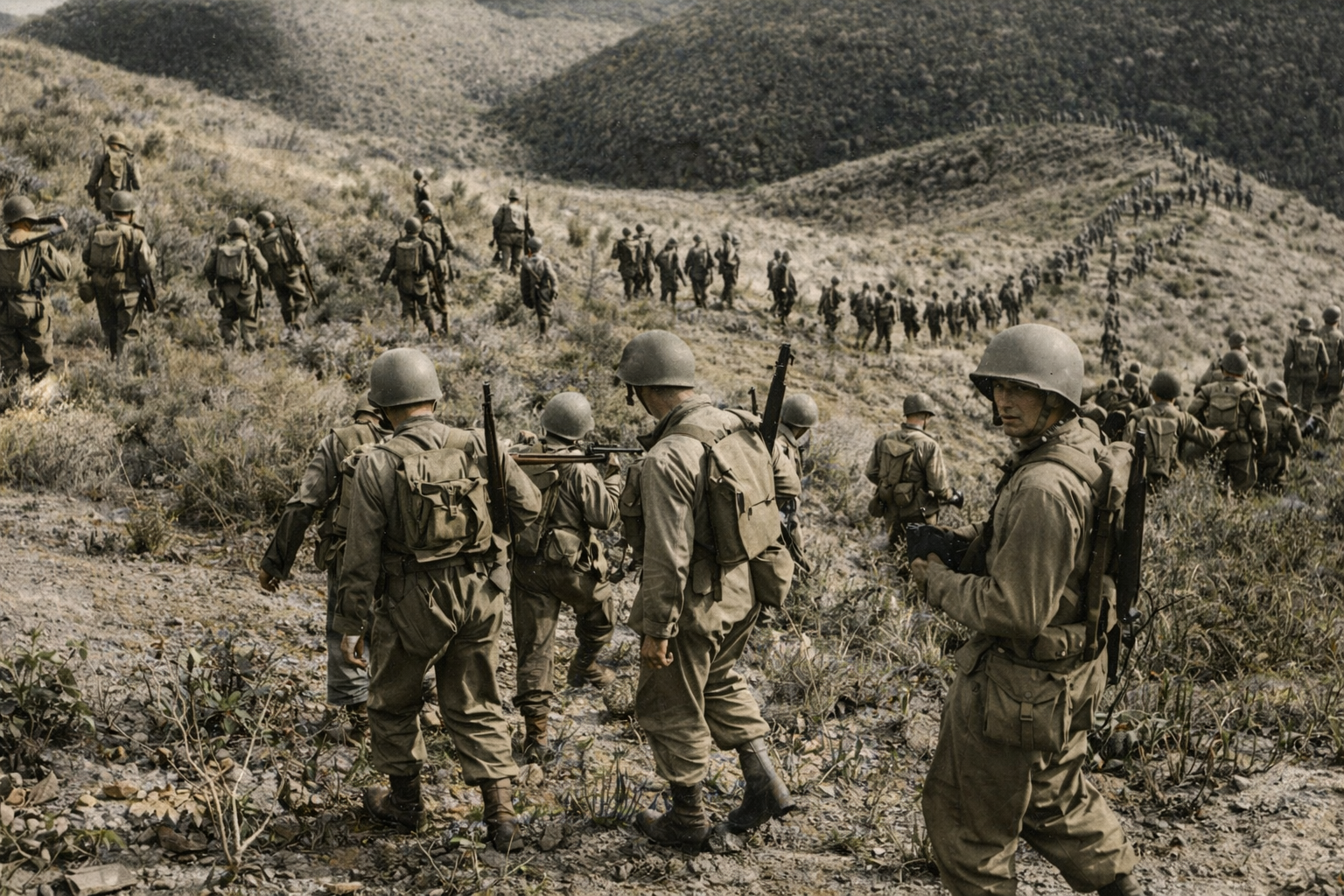
After the landings in North Africa, the Rangers continued operating alongside larger Allied forces as the campaign pushed east across Algeria and Tunisia.
Their assignments often placed them at the front of advancing units.
Rangers conducted patrols, captured key positions, and spearheaded attacks against Axis defenses. Their ability to move quickly and strike suddenly made them valuable in a campaign that involved difficult terrain and rapidly shifting front lines.
For the men who had volunteered months earlier, the Rangers had become something more than a new unit.
They had become a brotherhood forged in training and tested in battle.
A Reputation Begins
The success of the Rangers in North Africa ensured that the experiment would continue.
Additional Ranger battalions were soon formed.
These units would go on to fight in Sicily, Italy, and eventually in the invasion of Western Europe.
But the legend began on that dark shoreline in Algeria.
The Rangers had landed quietly, destroyed their target, and cleared the way for the Allied invasion.
It was their first combat mission.
And it proved that the United States Army now possessed a new kind of fighting force.
My novel Rangers, North Africa follows a unit of Darby’s Rangers from training in Scotland to their first brutal combat missions during Operation Torch.