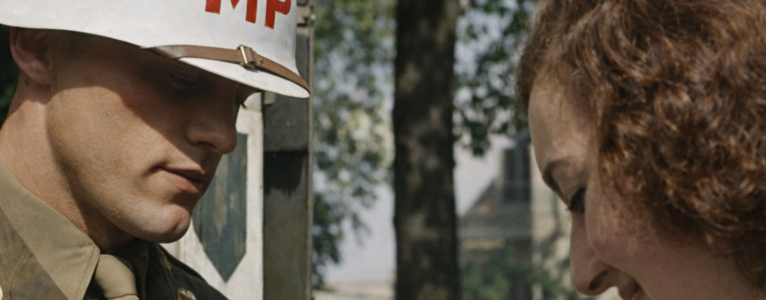
From Victory in Europe to the Frontline of the Cold War
When the fighting ended in Europe in May 1945, the 1st Infantry Division stood among the most experienced combat formations in the U.S. Army.
It had landed in North Africa, fought its way through Sicily, stormed Omaha Beach, and pushed deep into Germany.
But the end of World War II did not bring an end to its mission.
It marked the beginning of something very different.
No longer advancing.
No longer attacking.
Now, the division had to hold the peace in a defeated country, and help shape what came next.
From Battlefield to Occupation, Germany, 1945
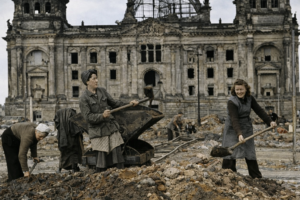
With Germany defeated, the role of the Big Red One changed almost overnight.
The division transitioned from frontline combat operations to occupation duty inside a country that had collapsed under total war.
The environment they entered was chaotic:
- cities reduced to rubble
- millions of displaced civilians
- shortages of food, fuel, and basic services
- former soldiers returning home with no clear future
The division’s responsibilities were immediate and constant:
- securing towns and key infrastructure
- maintaining order among civilian populations
- overseeing prisoner-of-war camps
- preventing looting, unrest, and reprisals
The enemy had surrendered, but instability remained everywhere.
For many soldiers, this was a different kind of pressure. There were no front lines, no clear objectives, and no obvious end point.
The war was over.
But peace had not yet taken hold.
Justice After War, Nuremberg, 1945–1946
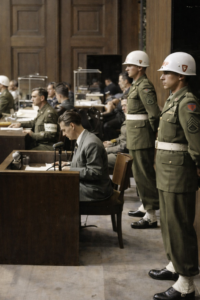
As part of its occupation duties, the 1st Infantry Division operated within the American zone of Germany, the same region where the Nuremberg Trials would take place.
These trials were designed to prosecute senior Nazi leaders for crimes committed during the war, marking one of the first large-scale efforts to establish international accountability for war crimes.
While the division was not responsible for courtroom security — a task carried out primarily by U.S. Army Military Police — its presence contributed to the broader stability required for the trials to proceed.
In practical terms, this included:
- securing surrounding areas and infrastructure
- maintaining order in nearby cities and transport routes
- supporting the handling and movement of prisoners within the occupation zone
For soldiers of the Big Red One, this marked a clear shift in purpose.
They were no longer fighting an enemy.
They were helping enforce the aftermath of victory.
The battlefield had been replaced by something else entirely:
Accountability.
Demobilization, A Force Reduced
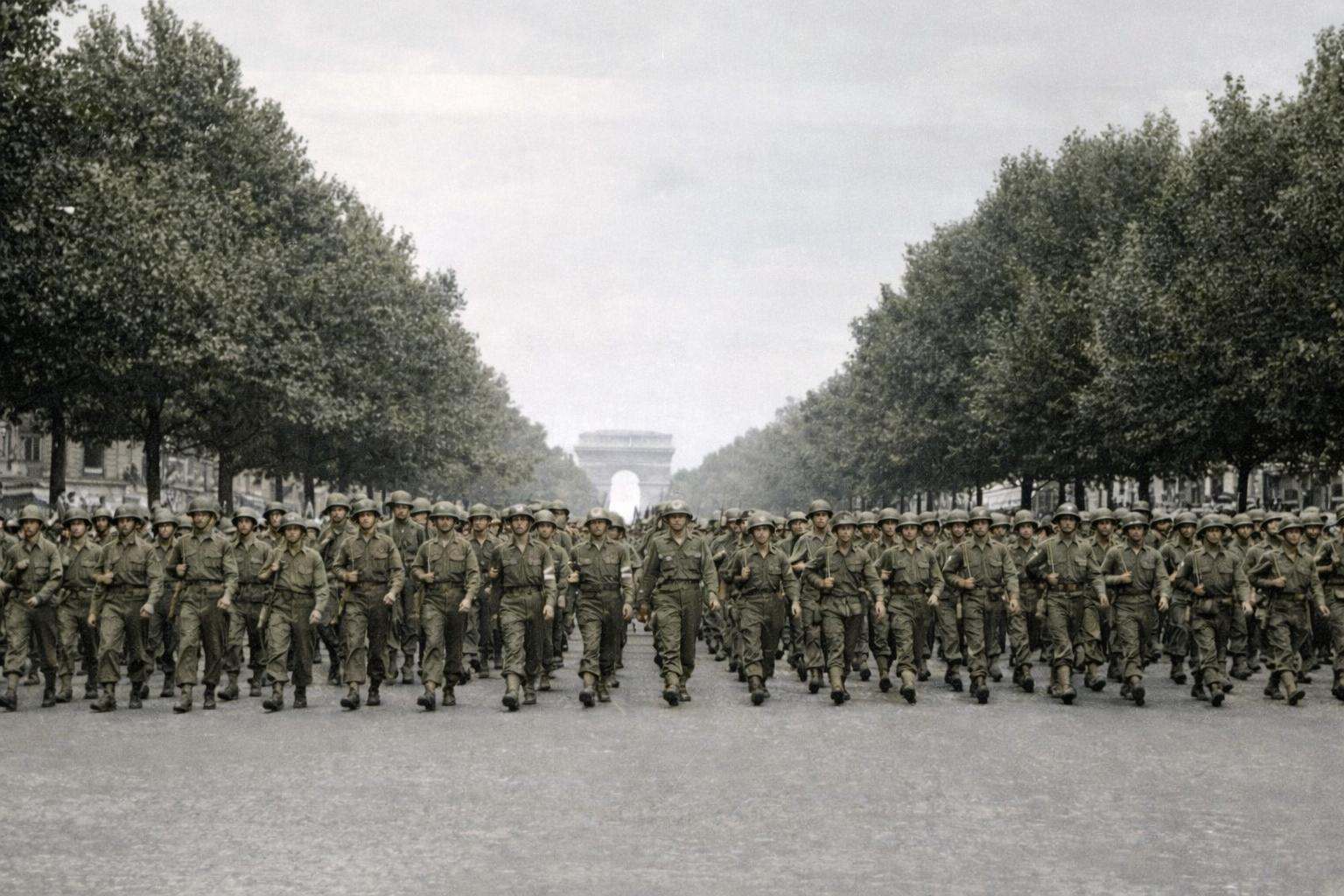
Like the rest of the U.S. military, the 1st Infantry Division was rapidly downsized after the war.
Millions of soldiers were sent home. Units were reorganized or reduced as the United States shifted away from wartime mobilization.
For the division, this meant:
- the loss of experienced veterans
- reduced manpower and equipment
- a period of restructuring and uncertainty
For a brief moment, it seemed possible that the United States might once again reduce its global military presence.
But that moment did not last.
A New Conflict Emerges, The Cold War
By the late 1940s, tensions between the United States and the Soviet Union were rising rapidly.
The alliance that had defeated Nazi Germany fractured, replaced by suspicion, competition, and the threat of another war — one that could be even more destructive.
Germany became divided. Europe became a frontline.
And once again, the Big Red One found itself in position.
The Frontline of Deterrence
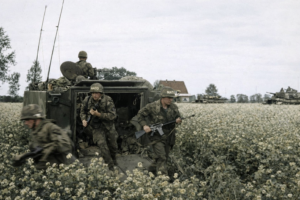
Throughout the 1950s and early 1960s, the 1st Infantry Division remained stationed in West Germany as part of NATO’s forward defense.
This was not an active war, but it was not peace either.
It was preparation.
The division trained for a conflict that many believed was inevitable:
- large-scale armored warfare against Soviet forces
- rapid response to a potential invasion across Central Europe
- coordination with allied NATO armies
Exercises were constant and realistic. Units rehearsed defensive operations in areas such as the Fulda Gap, a region considered one of the most likely avenues for a Soviet advance into Western Europe.
At the same time, warfare itself was changing.
Technology advanced rapidly:
- more powerful tanks
- improved communications
- integration of air support and mechanized infantry
- the looming presence of nuclear weapons
The lessons of World War II were not discarded.
They were refined for a new kind of battlefield.
A Division Waiting for War
For nearly two decades, the Big Red One stood watch in Europe.
There were no major battles.
No decisive victories.
No dramatic headlines.
But the mission was critical.
Deterrence.
The presence of experienced American divisions in Europe, including the 1st Infantry Division was intended to prevent war by making its cost unmistakably clear.
And for years, it worked.
Toward a Different War
By the early 1960s, however, the nature of conflict began to shift.
The focus moved away from large-scale war in Europe toward smaller, more complex conflicts elsewhere in the world.
One of those conflicts was already growing in Southeast Asia.
The Big Red One would soon leave its Cold War position and enter a very different kind of war — one defined not by front lines and massed armies, but by jungle terrain, guerrilla tactics, and an elusive enemy.
In the next part of this series, the division goes to Vietnam.