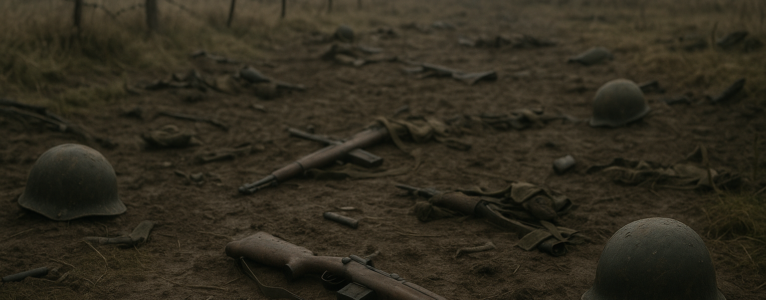
There’s a comforting lie that clings to elite units: that skill, courage, and reputation bend reality. Cisterna shattered that lie. Not gently, catastrophically.
On 30 January 1944, two U.S. Army’s Ranger Battalions walked into an ambush so complete it erased the unit as a combat formation. This wasn’t a tragedy born of bad luck. It was a foreseeable failure created by bad assumptions, thin intelligence, and commanders who believed their own legend. If you want to respect the men who died or were captured, stop polishing the story. Tell the truth.
What Happened, Without the Romance
The 1st and 3rd were ordered to infiltrate through what intelligence claimed was lightly held terrain and seize Cisterna during the Anzio campaign. The plan hinged on speed and surprise. It assumed the enemy was thin, disorganized, and slow to react.
That assumption was wrong.
Instead of scattered rear-echelon troops, the Rangers met elements of the Hermann Göring Panzer Division and Fallschirmjäger, supported by armor, machine guns, and pre-sighted fires. Surprise evaporated almost immediately. Cut off, outgunned, and too deep for timely reinforcement, the 1st Rangers were surrounded. Hundreds were killed, wounded, or captured. The battalion ceased to exist.
Calling this a “heroic last stand” misses the point. The Rangers fought hard. The plan failed harder.
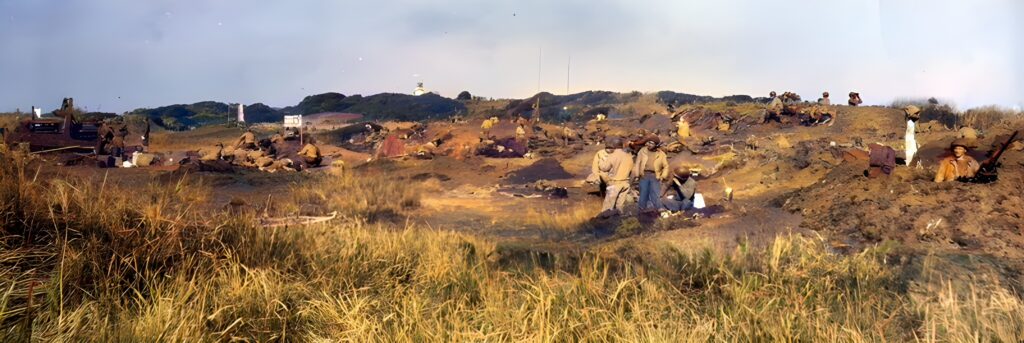
The Anzio operation was based on the assumption that the enemy would react slowly. He did not.
Lucian K. Truscott Jr. (VI Corps)
The Myth That Set the Trap
Elite units earn their reputation, and then risk being crushed by it. Before Cisterna, Rangers had delivered audacious successes at Arzew, Gela, and Salerno. Those victories bred a dangerous shortcut in planning: Because they’re Rangers, they can do it.
That logic replaces analysis with faith. It turns risk into destiny and treats courage as a substitute for firepower. Elite training doesn’t negate physics. Light infantry cannot absorb armor and heavy weapons by willpower alone. At Cisterna, the Army bet on a myth, and the house collected.
Intelligence Failure, Not “Fog of War”
“Fog of war” is the refuge of people who don’t want to own decisions. Cisterna’s intelligence picture wasn’t merely incomplete; it was catastrophically wrong.
There was no reliable confirmation of enemy strength. No layered reconnaissance to verify assumptions. No serious plan for what to do if armor appeared. No credible exfiltration option if surprise failed. The operation was built on the absence of an enemy, not on managing an enemy’s reaction.
That’s negligence masquerading as optimism.
Isolation by Design
The Rangers were sent too far, too fast, with too little support. Artillery wasn’t positioned to matter. Armor couldn’t reach them in time. Reinforcement was aspirational, not planned.
Special operations succeed on redundancy, overlapping fires, flexible extraction, abort criteria. Cisterna had none of that. Once contact was made, the outcome was decided by the clock.
Institutions Learn, But Only After Disaster
Here’s the uncomfortable truth about armies: they rarely learn from memos. They learn from graves.
Cisterna forced a reckoning. Quietly, without public scapegoats, the U.S. Army adjusted:
- Elite ≠ Invincible. Rangers would not be thrown deep against mechanized forces without support and contingency.
- Intelligence First. Later doctrine emphasized multi-source verification and clear abort criteria. If the intel is shaky, the mission is already dead.
- Combined Arms or Don’t Go. Light infantry stopped being treated as a universal key. Armor, artillery, and air had to be integrated, planned, not promised.
- Planning Over Reputation. “Because they’re Rangers” ceased to be an acceptable justification. Risk assessments hardened.
The Rangers were later reconstituted with a different understanding of how, and when, to use elite light forces. That evolution was paid for at Cisterna.
Why This Matters Beyond the History Books
I explore this exact tension, between reputation and reality, in my novel Rangers O’Conner, Book 1: Italy. The story isn’t about invincible men performing cinematic feats. It’s about skilled soldiers operating inside flawed plans, under commanders who sometimes get it wrong, and paying the price when assumptions collide with enemy firepower.
Fiction has a responsibility when it borrows real blood. If it reinforces myths, it lies. If it exposes the cost of those myths, it tells a deeper truth.
Respecting the Men Means Telling the Truth
The men of the 1st Ranger Battalion didn’t fail. They did exactly what they were trained to do, with extraordinary courage, under impossible conditions. They were failed by judgment above them.
Honoring them doesn’t mean sanding down the story until it’s comfortable. It means rejecting the lie that elite units are immune to bad plans. It means acknowledging that institutions improve only after they bleed. And it means remembering that bravery, while indispensable, is never enough by itself.
Cisterna matters because the lesson still applies. When reputation replaces analysis, when intelligence is assumed rather than proven, and when courage is used to paper over planning gaps, disaster isn’t unlucky, it’s scheduled.
That’s not cynicism. That’s respect.