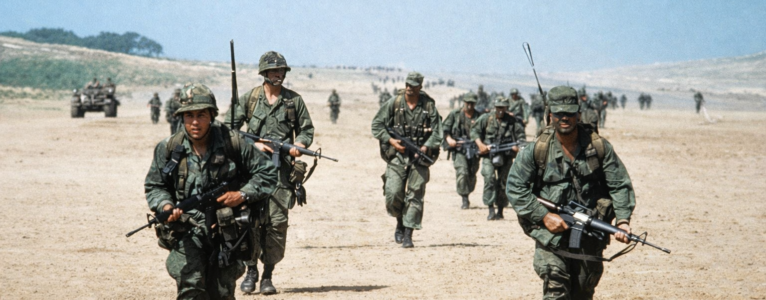
By the early 1980s, the modern Ranger force had spent nearly a decade preparing for combat. The battalions formed after Vietnam trained constantly for airborne assaults, airfield seizures, and rapid deployment missions.
When the United States finally called upon the Rangers again, it would be in two dramatic Cold War interventions: Grenada in 1983 and Panama in 1989.
Both operations demonstrated the role the Rangers had been built for, rapid airborne assaults to seize critical objectives before larger forces arrived.
Operation Urgent Fury: Grenada, 1983
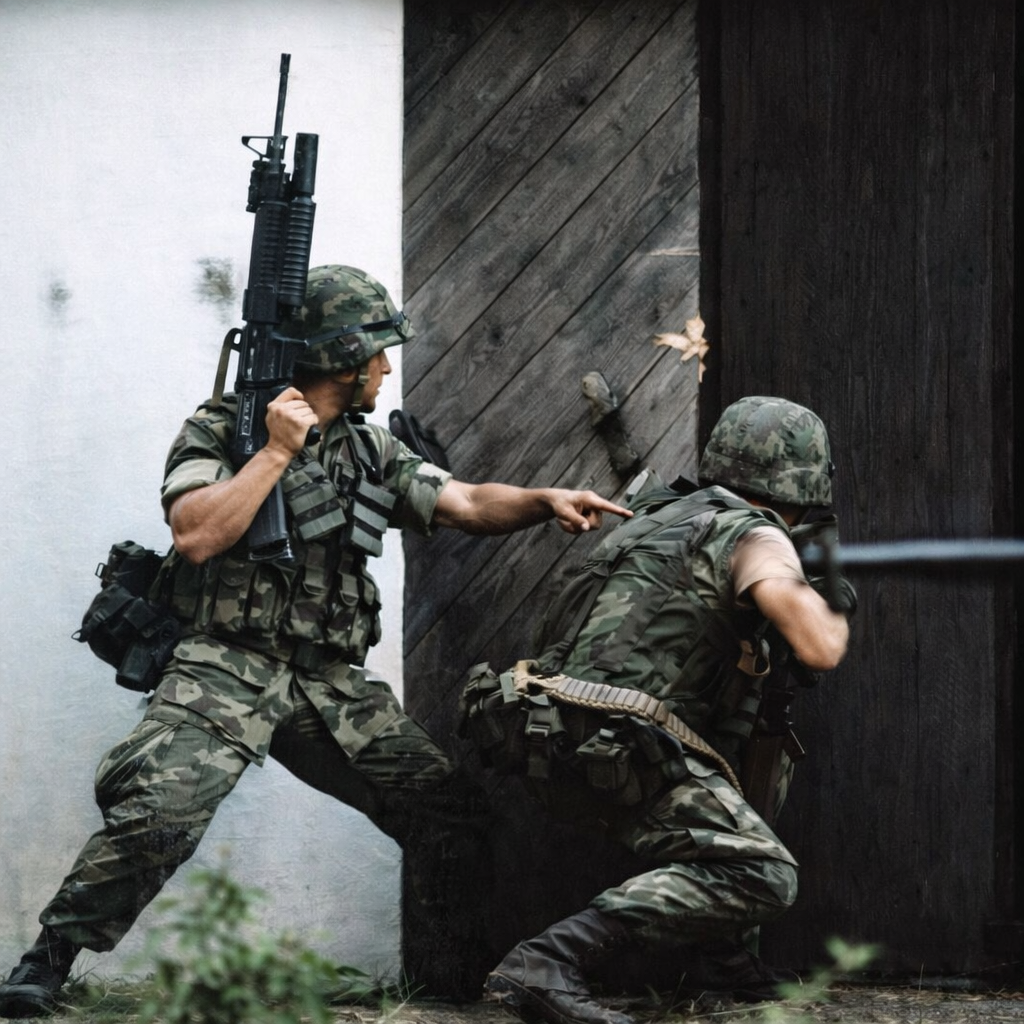
In October 1983, the United States launched United States invasion of Grenada, known as Operation Urgent Fury. The mission aimed to restore order on the Caribbean island after a violent political coup and to protect American citizens, including hundreds of medical students studying there.
The assault force included the 75th Ranger Regiment, specifically the 1st Ranger Battalion and 2nd Ranger Battalion.
Their primary objective was the island’s main airport at Point Salines.
Originally, the Rangers were supposed to land directly on the runway. But while en route, commanders learned the runway was blocked by construction equipment and obstacles.
The plan changed immediately.
The Rangers would parachute in.
At dawn on October 25, 1983, the battalions conducted a low-level combat jump from C-130 aircraft, descending through anti-aircraft fire onto the airfield.
Once on the ground, the Rangers moved quickly to:
- secure the runway
- destroy armored resistance
- clear the surrounding high ground
Within hours, they had captured the airfield and opened it for follow-on forces, including paratroopers from the 82nd Airborne Division.
The seizure of Point Salines demonstrated exactly why the Rangers existed: they could strike quickly and secure critical objectives that allowed larger forces to enter the battle.
Operation Just Cause: Panama, 1989
Six years later, the Rangers were called upon again.
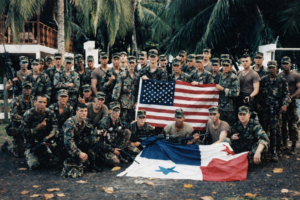
In December 1989, the United States launched United States invasion of Panama, known as Operation Just Cause. The objective was to remove Panamanian dictator Manuel Noriega and secure U.S. interests in the region.
This time, the Ranger mission was even larger.
The 75th Ranger Regiment was tasked with conducting simultaneous airborne assaults on key airfields across Panama.
One of the most dramatic battles occurred at Rio Hato Airfield.
The mission fell primarily to the 2nd Ranger Battalion and 3rd Ranger Battalion.
In the early hours of December 20, 1989, nearly 800 Rangers parachuted from C-130 aircraft onto the heavily defended airfield. The drop occurred under intense fire from Panamanian Defense Forces. (Wikipedia)
Despite the resistance, the Rangers quickly seized the objective.
Their tasks included:
- capturing the airfield
- neutralizing Panamanian military units stationed there
- securing nearby military facilities
Within hours, the Rangers had taken control of the area and captured large quantities of enemy weapons and equipment. (Wikipedia)
Other Ranger elements simultaneously seized Torrijos-Tocumen International Airport, opening another entry point for U.S. forces entering Panama. (Wikipedia)
The Return of Large-Scale Ranger Assaults
The operations in Grenada and Panama marked the first large-scale combat deployments of the modern Ranger force.
They confirmed that the Ranger concept, elite light infantry capable of rapid airborne assault was still highly effective decades after its origins in World War II.
In both conflicts, Rangers performed the missions they had trained for since the 1970s:
- parachute assaults onto defended objectives
- rapid seizure of airfields
- securing landing zones for follow-on forces
These operations proved the value of maintaining a permanent Ranger regiment ready to deploy anywhere in the world on short notice.
A Force Ready for the Future
By the end of the Cold War, the Rangers had once again established themselves as one of the most capable light infantry forces in the U.S. military.
The lessons learned in Grenada and Panama would shape future Ranger operations in the decades that followed.
Soon, the regiment would face a new era of conflict.
From the streets of Mogadishu to the mountains of Afghanistan and the deserts of Iraq, Rangers would continue to carry out some of the most demanding missions in modern warfare.
But the return to combat in Grenada and Panama proved something essential:
The Rangers were no longer a temporary wartime experiment.
They were now a permanent part of America’s elite fighting forces.
Next in the series:
Rangers in the War on Terror, how the Ranger Regiment fought during the first Gulf War.
If you like to read more about Operation Just Cause and Operation Urgent Fury, consider reading my book ‘Islands at war’